 (+351) 932 224 792
  info@luznurcapital.com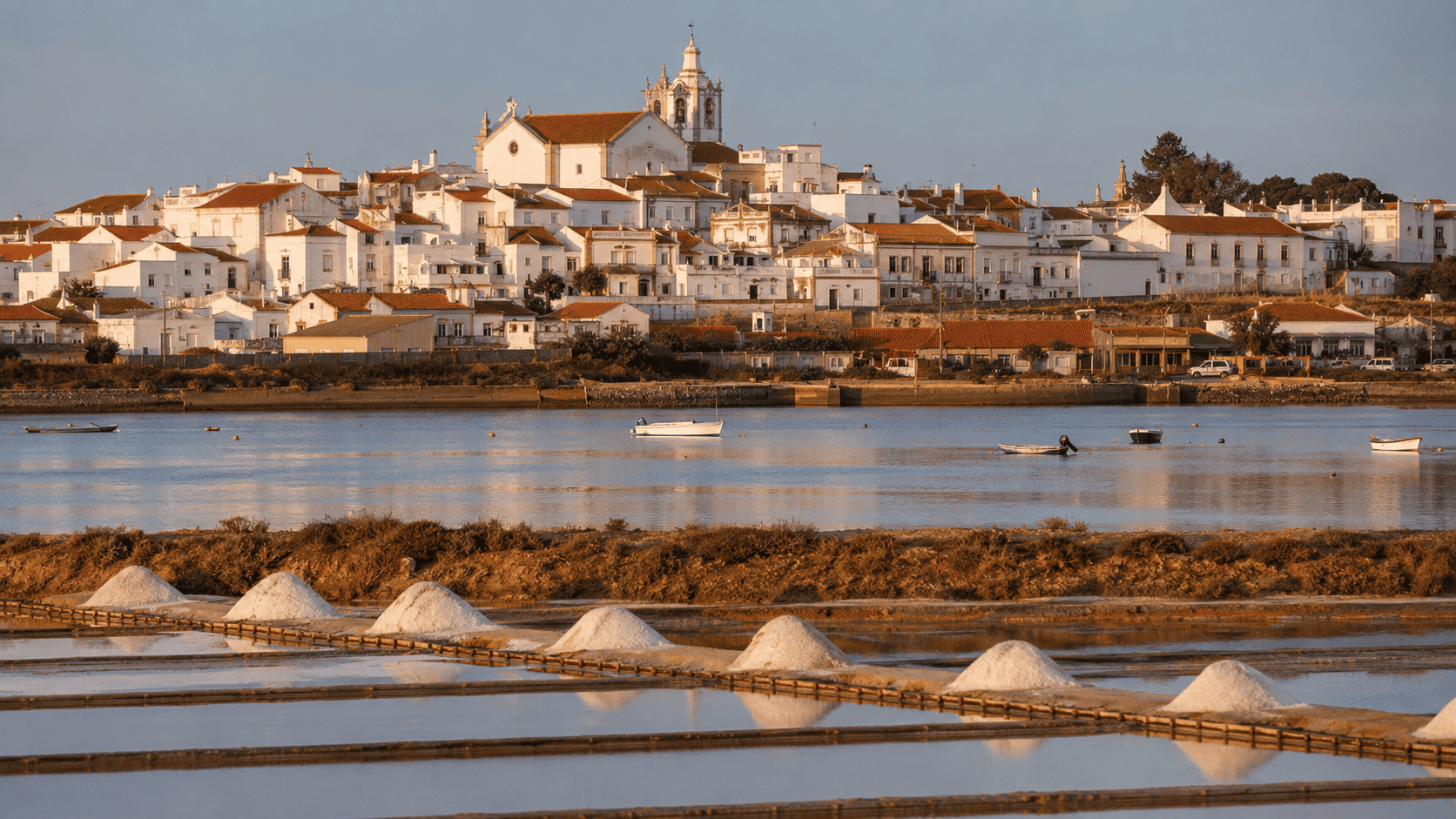
Where to retire in the Algarve: a practical guide
Healthcare, seasons, and mobility
Every hospital in the Algarve is in Faro or west of it.
The three public hospitals sit in Faro, Portimão, and Lagos. The private units — the HPA group at Alvor, Gambelas in Faro, São Camilo in Portimão, and São Gonçalo in Lagos, alongside Lusíadas at Albufeira and Vilamoura, and the Hospital de Loulé — follow the same pattern. East of Faro, across the whole Sotavento to the Spanish border, there is no hospital.
That is the most consequential fact in this article, and almost no retirement guide mentions it. The eastern Algarve is warmer, calmer, cheaper, and quieter than the rest of the region — the geography most retirees find most appealing — and it is the furthest from emergency care.
None of which makes it the wrong choice. It makes it a choice that should be made deliberately, alongside the other three questions that actually determine whether a retirement here works: how the climate varies across 150 kilometres of coast, what the place is like in February, and what happens when you stop driving.
What changed on pension tax
Any guidance describing Portugal as a low-tax destination for retirees is out of date, and the correction matters before location is discussed.
The NHR regime, which applied a flat 10% to foreign pension income, is closed to new applicants. Its replacement, IFICI, excludes pension income entirely. It requires a qualifying degree at EQF level 6 or above and a designated high-skilled activity performed in Portugal each year, which by definition most retirees are not doing.
A retiree becoming Portuguese tax resident today is therefore taxed on pension income at ordinary progressive IRS rates, which reach 48% at the upper bands.
Two qualifications. Double taxation treaties vary, and some give exclusive taxing rights over government and civil service pensions to the paying state — a distinction that materially changes the position for former public sector employees, and one that requires advice on the specific treaty rather than a general assumption. And several countries now offer what Portugal does not: Greece applies a flat 7% to foreign pension income for up to fifteen years.
Portugal’s case for a retiree in 2026 rests on climate, healthcare, safety, cost of living, and the absence of wealth and inheritance taxes. It no longer rests on income tax, and anyone told otherwise should ask when the advice was written.
The healthcare map
Distance to emergency care matters more at seventy-five than sea view does, and the two rarely point to the same address.
Densest coverage runs from Loulé through Almancil, Vilamoura, and Albufeira to Faro. This corridor has Lusíadas hospitals at Vilamoura and Albufeira with 24-hour care, the Hospital de Loulé, HPA Gambelas and the public hospital in Faro, and a Lusíadas walk-in clinic in Faro city. A resident of Vilamoura, Almancil, or Quinta do Lago is minutes from private emergency care and around twenty minutes from a full public hospital.
Good coverage in the west, around Portimão, Alvor, Lagoa, and Lagos, with the public hospitals at Portimão and Lagos, HPA at Alvor, São Camilo in Portimão, and São Gonçalo in Lagos.
Thin coverage east of Faro. Tavira has a health centre and private clinics but no hospital; the nearest is Faro, roughly thirty kilometres away. From Vila Real de Santo António, Monte Gordo, or Praia Verde, Faro is closer to fifty kilometres — twenty-five to forty minutes by car on the A22 in normal conditions, longer for an ambulance dispatched to a rural address.
Thin coverage in the far west and inland. Sagres, Vila do Bispo, and Aljezur are a substantial run from Lagos. Monchique has an HPA clinic but sits in the hills above Portimão.
Two practical points follow. Private health insurance in Portugal becomes materially more expensive with age and frequently excludes pre-existing conditions, so it should be arranged before relocation rather than after. And residents can register with the SNS, the public system, which is well regarded but carries waiting times for non-urgent treatment — most international retirees here hold both.
The east-west divide
The Algarve is not one climate. The Sotavento runs east from roughly Faro to the Guadiana and the Spanish border; the Barlavento runs west from Portimão to Sagres. The difference between them is larger than most visitors realise, because most visitors come in May to August.
The Sotavento is sheltered, warmer, and calmer. Partly protected from the prevailing northwest Atlantic swell and the ponente wind, with the Ria Formosa lagoon acting as a solar collector across sixty kilometres of shallow water, and warm saline water trapped near the Guadiana mouth. Sea temperatures run two to three degrees above the west year-round, reaching 22–25°C in late summer against 21–23°C in the Barlavento. The terrain is flat, the beaches are long and sandy, and barrier islands sit offshore.
Its complication is the Levante — a hot dry wind from the African interior that hits the east hardest, most commonly in July and August, typically lasting two to five days per episode. When it blows, temperatures in Tavira reach 38–40°C while the western coast stays substantially cooler. For anyone with cardiac or respiratory conditions, that is worth knowing before committing.
The Barlavento is cooler, breezier, and more dramatic. Limestone cliffs, coves, stronger Atlantic swell, and better surf. Sagres and Aljezur run two to three degrees cooler in summer and record three to five more rain days in winter than Faro. Lagos and the central-western coast sit in between, with the Atlantic moderating August heat in a way the east does not.
Inland Monchique is a different climate again. The range intercepts Atlantic systems moving east, producing 900–1,200mm of annual rainfall at altitude against 450–550mm on the coast. Cooler, greener, wetter, and — given the region’s fire history — carrying wildfire risk that coastal addresses do not.
Across the region, roughly 3,000 hours of sunshine annually, among the highest in Europe.
The practical guidance: if summer heat is a concern, look west. If winter mildness and calm water matter more, look east. Visit both in August and again in January before deciding.
The Sotavento: Tavira, Vila Real de Santo António, and the eastern coast
Tavira is the most complete town in the eastern Algarve and the strongest all-round retirement proposition in the Sotavento. A working Portuguese town on the Gilão river with a Roman bridge, castle, saltpans, a genuine market, and a year-round population that does not evaporate in October. Restaurants stay open. There is a substantial and long-established international community, predominantly British and Northern European, without the resort character of the central Algarve. Property is materially cheaper than the Golden Triangle. Its constraint is the hospital distance to Faro, and the fact that daily life largely requires a car once you are outside the historic centre.
Cabanas de Tavira offers a quieter, smaller version with lagoon frontage and a boardwalk, and correspondingly fewer services.
Vila Real de Santo António sits on the Guadiana facing Spain, with a Pombaline grid plan, a ferry to Ayamonte, and the practical advantage of Spanish supermarkets and services fifteen minutes away. Seville airport is roughly two hours by road, which for some households is a genuine alternative to Faro.
Monte Gordo is a beach town with a long sandy frontage and a substantial Portuguese and Spanish summer population. Quiet in winter, and flat, which matters more than it sounds.
Praia Verde and Altura are the quieter, greener, pine-backed stretch between Monte Gordo and Cacela Velha, with low-density villa development and the calmest water on the mainland coast. Very peaceful. Very few services within walking distance, and the furthest of any developed part of the Algarve from a hospital.
Castro Marim offers the salt marsh nature reserve, a castle, and two golf courses, inland from the coast.
Olhão and Fuseta, west of Tavira, are working fishing towns on the Ria Formosa with excellent markets, a strong recent rise in international interest, and a closer run to Faro.
The central corridor: Vilamoura, Vale do Lobo, Quinta do Lago, and Loulé
This is where the Algarve’s international infrastructure is concentrated, and where a retiree gives up affordability in exchange for services.
Quinta do Lago is low-density, gated, quiet, and expensive — averaging around €11,145 per square metre in January 2026, the highest of any address in Portugal. Large villas on generous plots, three golf courses plus San Lorenzo adjacent, the Ria Formosa on its southern edge, and a sports and dining infrastructure operating year-round. It is not a town. There is no square, no market, no pharmacy you walk to. Everything requires a car or a buggy, and daily life is organised around the estate rather than around a community.
Vale do Lobo is more compact and more beach-oriented, with the Royal and Ocean courses and a resort square that functions as a social centre.
Almancil is the service town between them — supermarkets, pharmacies, restaurants, professional services, and a genuine Portuguese population alongside the international one. Many people who want the Golden Triangle’s amenities without its pricing or isolation live here.
Vilamoura offers the marina, five golf courses, a functioning town with year-round activity, and the widest price range in the prime Algarve. It also has a 24-hour private hospital on the doorstep. For a retiree who wants amenity, walkability, healthcare proximity, and golf in one place, Vilamoura is arguably the strongest single answer in the region.
Loulé is the inland market town of the central Algarve — a real Portuguese town with a covered market, a hospital, and pricing well below the coast.
Albufeira is larger and more touristic, with a 24-hour hospital and a strip that most retirees avoid, though the surrounding areas including Olhos de Água are quieter.
Tavira or Quinta do Lago
These two are frequently presented as alternatives, and they answer opposite questions.
Quinta do Lago gives you space, privacy, security, immaculate surroundings, golf on your doorstep, hospitals fifteen minutes away, and an international community. It costs several times what Tavira costs. It is not a town and does not pretend to be, so integration means the estate and its clubs rather than a neighbourhood. Its residents are overwhelmingly international — the Golden Triangle runs at roughly 80% international ownership — so day-to-day life happens largely in English.
Tavira gives you a functioning Portuguese town with history, a market, walkable streets, restaurants that open in January, and a lower cost of living. It costs a fraction of the Golden Triangle. Healthcare requires a drive to Faro. Integration is available in a way it is not on a gated estate, and speaking some Portuguese matters more. There are prestigious golf courses close to Tavira.
The honest test: do you want to live in Portugal, or in an international community that happens to be located in Portugal? Both are legitimate. Buyers who answer that question first rarely regret the choice; buyers who don’t tend to end up in the wrong one and move within three years.
The Barlavento: Lagos, Carvoeiro, and the west
Lagos is the strongest all-round choice in the western Algarve and, for many retirees, in the region. A walled historic town with real depth — a marina, a working centre, restaurants and services operating year-round, a substantial and well-established international community, and a public hospital plus HPA’s São Gonçalo within the town. It is walkable in a way that almost nothing in the central Algarve is. Summers are moderated by Atlantic influence rather than intensified by the Levante. Property prices sit below the Golden Triangle and above Tavira.
Praia da Luz, just west, is a quieter village with a long British presence and a flat, walkable seafront.
Carvoeiro and Ferragudo are smaller and more scenic, with Carvoeiro built around a cove and Ferragudo a fishing village across the river from Portimão. Both are attractive and both are quieter in winter than Lagos.
Portimão and Alvor offer the practical infrastructure of a small city — hospitals, shopping, transport — with Alvor providing a village character and a long beach.
Silves, inland, is the former Moorish capital with a red sandstone castle and pricing well below the coast.
The far west — Sagres, Vila do Bispo, Aljezur, and the Costa Vicentina — is spectacular, wild, and windy, and it is a poor retirement choice for most people. Services are minimal, the drive to Lagos is substantial, winters are cooler and wetter, and the isolation that makes it appealing at fifty-five becomes a genuine problem later.
Inland
São Brás de Alportel is the most practical inland option: a real town in the hills above Faro, roughly twenty minutes to the hospital, cooler in summer, with an established international community and prices well below the coast.
Monchique is beautiful, green, cool, and remote, with wildfire risk and a long descent to Portimão for anything substantial.
Inland generally buys you more property for less money, more Portuguese daily life, and cooler summers, at the cost of distance from everything.
Golf, honestly
Golf is a genuine reason to retire here.
The Algarve’s course density is real — five at Vilamoura, three at Quinta do Lago plus San Lorenzo, two at Vale do Lobo, Monte Rei to the east, and a substantial western cluster around Lagos and Portimão. Playing year-round in shirtsleeves is not a marketing claim.
Two cautions. Owning a property on a course generally does not give you the right to play it — membership is a separate contract with separate cost, frequently personal rather than attached to the property, and often not transferable on resale. Establish the structure in writing before buying.
And golf is a poor organizing principle for a location decision at this stage of life, because it assumes a level of mobility that may not persist. A house chosen for its proximity to the eighteenth tee, in a location with nothing else within walking distance, becomes isolating if you stop playing.
The February test
Every part of the Algarve is at its best in August. Several are unrecognisable in February.
Resort areas empty. Restaurants close, the population falls sharply, and the social infrastructure contracts. Quinta do Lago, Vale do Lobo, Praia Verde, and Carvoeiro are all substantially quieter in winter.
Towns keep functioning. Tavira, Lagos, Loulé, Olhão, Portimão, and Silves have year-round Portuguese populations and do not shut down.
For a retiree this distinction matters more than for anyone else, because isolation in later life is a health issue rather than an inconvenience. The reliable test is simple and almost nobody applies it: visit the shortlisted location on a wet Tuesday in February, and see what is open and who is around.
Mobility, and buying for later
The Algarve is car-dependent. Public transport between towns is limited, resort areas are designed around driving, and many attractive properties sit at the end of a track.
The question worth asking is what happens when driving stops — which for most people it eventually does. A house that works at sixty-five and fails at eighty-five is an expensive mistake, because moving at that age is considerably harder than choosing well now.
Practical implications: prefer walkable town centres over isolated villas if a long horizon matters. Prefer single-storey or lift-served properties over houses with stairs. Prefer flat terrain — Monte Gordo, Tavira’s newer quarters, and Vilamoura are flat; Carvoeiro, Ferragudo, and much of Lagos’s old town are not. Check what is genuinely within walking distance: a pharmacy, a supermarket, a café, a bus stop.
Proximity to an airport also matters more than expected, because family visits become the main social calendar. Faro serves the whole region, with Seville a practical alternative from the far east.
A decision sequence
Establish the tax position first, including how your specific pension is treated under the relevant treaty. It may change the country, not just the town.
Decide whether you want a Portuguese town or an international community. This single question eliminates most of the map.
Map your shortlist against the hospital locations, and be honest about your own health horizon rather than your current health.
Visit in August and again in February, midweek.
Test the walkability of the specific address, not the town.
Confirm the residency route — the D7 suits those with stable passive income, and requires genuine residence — and arrange private health insurance before relocating rather than after.
Then buy, choosing for the person you will be in twenty years rather than the one arriving.
How Luznur Capital works with retiring clients
Matching the location to the actual requirement, which usually differs from the initial brief. Buyers arrive asking for sea view and quiet, and frequently need walkability and services.
Mapping healthcare, services, and terrain against specific addresses rather than towns, since two properties in the same postcode can differ entirely on this.
Coordinating the tax and residency position with Portuguese legal and tax partners before the property decision, because the pension treatment can change the answer.
Off-market access in the established resort and town markets, where a meaningful share of the better inventory transacts privately.
Honest counsel on the wrong choice. Where a client’s requirements point away from a location they have set their heart on, saying so is the service.
FAQ
Where is the best place to retire in the Algarve?
It depends on the priority. Vilamoura offers the strongest combination of amenity, walkability, golf, and a 24-hour hospital on the doorstep. Lagos is the best all-round western choice, with a functioning year-round town and two hospitals. Tavira offers the most authentic Portuguese town life at a lower cost, with the trade-off of a thirty-kilometre run to the nearest hospital in Faro.
Where are the hospitals in the Algarve?
Public hospitals in Faro, Portimão, and Lagos. Private units include HPA at Alvor, Gambelas in Faro, São Camilo in Portimão and São Gonçalo in Lagos, Lusíadas at Albufeira and Vilamoura, and the Hospital de Loulé. All are in Faro or west of it — there is no hospital in the eastern Algarve beyond Faro, so residents of Tavira, Vila Real de Santo António, Monte Gordo, and Praia Verde travel to Faro for emergency care.
Is the eastern or western Algarve better for retirement?
The east — Tavira, Monte Gordo, Praia Verde — is warmer, calmer, flatter, cheaper, and has the warmest sea on mainland Portugal, but is furthest from hospitals and can reach 38–40°C when the Levante blows. The west around Lagos is cooler in summer, breezier, has better hospital coverage and more walkable towns, and costs more than the east.
Does Portugal still have tax benefits for retirees?
Not on pension income. The NHR regime that applied a flat 10% to foreign pensions is closed to new applicants, and its replacement IFICI excludes pension income entirely. New retiree residents are taxed at ordinary progressive IRS rates reaching 48%. Treaty provisions vary, particularly for government and civil service pensions, and require specific advice.
What is the difference between Tavira and Quinta do Lago?
Quinta do Lago is a low-density gated estate averaging around €11,145 per square metre, the most expensive address in Portugal, with golf, security, and hospitals nearby but no town centre and roughly 80% international ownership. Tavira is a working Portuguese town with a market, walkable streets, and year-round life, at a fraction of the cost, thirty kilometres from the nearest hospital.
How hot does the Algarve get in summer?
Coastal averages are moderate, but the eastern Algarve is affected by the Levante, a hot dry wind from the African interior that can push Tavira to 38–40°C for two to five days at a time, most often in July and August, while the western coast stays substantially cooler. Sagres and Aljezur run two to three degrees cooler than Faro in summer.
Which Algarve towns stay open in winter?
Tavira, Lagos, Loulé, Olhão, Portimão, and Silves have year-round Portuguese populations and continue functioning. Resort areas including Quinta do Lago, Vale do Lobo, Praia Verde, and Carvoeiro become substantially quieter, with many restaurants closed. Visiting a shortlisted location on a weekday in February is the most useful test available.
Do I need private health insurance in Portugal?
Residents can register with the SNS public system, which is well regarded but carries waiting times for non-urgent treatment. Most international retirees hold private insurance alongside it. Premiums rise considerably with age and policies frequently exclude pre-existing conditions, so cover should be arranged before relocating rather than afterward.
Does owning a house on an Algarve golf course include membership?
Usually not. Playing rights are a separate contract with their own cost and rules, frequently personal rather than attached to the property, and often not transferable to a buyer on resale. Confirm the structure in writing before purchase.
Which visa do I need to retire in Portugal?
The D7 is the usual route for those with stable passive income including pensions, and requires genuine residence rather than periodic presence. It is a residence route rather than an investment one. Requirements and processing should be confirmed with an immigration advisor.
Is this article tax or medical advice?
No. It presents general information as of August 2026. Tax treatment of pensions depends on individual circumstances and the applicable double taxation treaty, and healthcare arrangements should be confirmed with qualified professionals before relocating.
DISCLAIMER
Important information
This article is provided for general information only and reflects publicly available information as of August 2026. It does not constitute tax, legal, immigration, medical, or investment advice, and is not a recommendation regarding any property, location, or healthcare provider.
Healthcare facilities are described by location for planning purposes. Services, opening hours, emergency provision, and ownership change over time and must be verified directly. Nothing here should be relied upon in a medical situation or as an assessment of the quality of any facility. Travel times cited are indicative and vary substantially with traffic, season, and point of origin.
Tax treatment of pension income depends on individual circumstances, residence status, the type of pension, and the applicable double taxation treaty, and requires advice from qualified professionals in both the country of origin and Portugal. The IFICI regime and Portuguese residence permit routes are subject to amendment.
Climate figures are drawn from published meteorological summaries and reflect typical patterns rather than guarantees. Property price figures derive from asking-price indices and are indicative of relative position rather than valuation.
Luznur Capital is a licensed real estate brokerage and advisory firm (AMI 22354). It is not a law firm, tax practice, immigration advisor, or healthcare provider. Independent professional advice should be obtained before any relocation or acquisition decision.
General information as of August 2026, not tax, legal, immigration, or medical advice. Healthcare provision and travel times must be verified directly. Pension tax treatment depends on your circumstances and applicable treaty. Luznur Capital (AMI 22354).
Choosing where to retire in the Algarve
The right location depends on questions most buyers only ask after they have bought — how far the hospital is, what the street is like in February, and whether the house still works when driving stops.
Luznur Capital advises international clients across the Algarve, from the Sotavento to Lagos and the west, including off-market inventory, with coordinated legal, tax, and immigration partners.
To discuss a specific requirement, contact info@luznurcapital.com.
Tag:
Category:
- Alentejo (1)
- Algarve (15)
- Almancil (5)
- Buyer Guides by Nationality (6)
- Buying in Portugal (22)
- Cascais (6)
- Comporta (6)
- Costs & Fees (2)
- Country Comparisons (3)
- D7 Visa (5)
- D8 Visa (4)
- Diplomacy (1)
- Eastern Algarve (3)
- Economy (9)
- Estoril (5)
- Foreign Bilateral Relations (3)
- GCC (2)
- GCC Investors Portugal (2)
- Golden Triangle Algarve (5)
- Golden Visa (1)
- Golden Visa Portugal (2)
- HNWIs (16)
- International Buyers (24)
- Investing in Portugal (29)
- Investment (6)
- Investment & Advisory (15)
- Investment & Structuring (1)
- Lisbon (5)
- Lisbon (11)
- Market Data (6)
- Market Guides (8)
- Porto (6)
- Portugal (16)
- Quinta da Marinha (6)
- Quinta do Lago (11)
- Real Estate Portugal (32)
- Relocating to Portugal (14)
- Relocation (1)
- Residency & Investment (2)
- Sotavento Algarve (3)
- Tavira (7)
- Tourism (4)
- Vale do Lobo (5)
- Vila Real de Santo António (1)
- Vilamoura (5)
- Wealth Management (1)
- Wealth Management Portugal (4)