(+351) 932 224 792
 info@luznurcapital.com
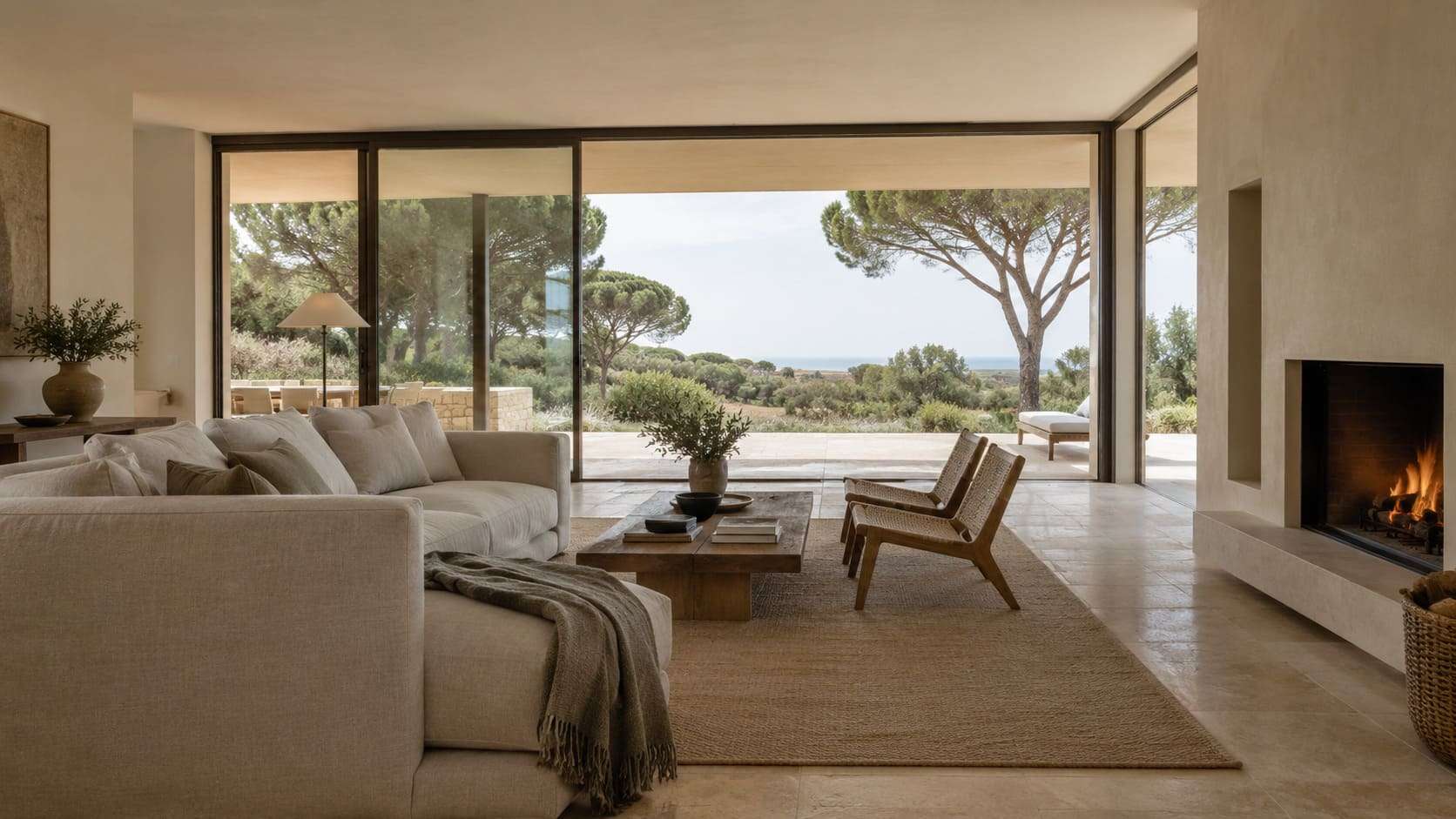
Buying a Luxury Home in Portugal: What International Buyers Overlook
International buyers of luxury homes in Portugal usually check the price, the view, and the paperwork — and overlook how the house will actually live. How it is heated in winter, where its water comes from, what the neighbors are allowed to build, what it costs to keep, and who will buy it next. These are the points that most often separate a good purchase from an expensive one.
This applies to second-home buyers and to families relocating, in Lisbon, Cascais, Comporta, the Algarve, and the countryside.
The main qualification: a turnkey home and a project carry different risks — and a project almost always costs more and takes longer than first quoted.
Winter, not summer
Most viewings happen in good weather. Most of the year isn’t summer.
Heating and insulation. Much of Portugal’s housing was built for mild winters, with limited insulation and no central heating. A house that is perfect in July can be cold and damp from November to March. Check how every room is heated, whether there is underfloor heating or a heat pump, and the energy certificate, which every sale requires.
Damp. Older stone houses, homes near the coast, and properties left closed for months are prone to it. Look at the lower walls, behind furniture, and in rooms facing north.
Wind and orientation. South- and southwest-facing homes get the light and warmth. A sea view to the north or west can mean wind and cold. The Atlantic coast west of Lisbon is often windy; the eastern Algarve has its own seasonal winds.
Visit in winter if you can. It is the single most useful thing a buyer can do.
The view, and what can change it
A view is only as secure as the planning rules on the land in front of it.
Check what neighbors can build. The municipal master plan sets what can be built on adjoining plots. An empty field today may be buildable tomorrow.
On the coast, check the shoreline rules. Coastal properties sit within specific planning and maritime rules that limit building and works, and some stretches face erosion.
Check the flight paths and the road. Lisbon’s airport, smaller aerodromes, and summer traffic on coastal roads affect some locations more than viewings suggest.
Access and services
Roads. Some of the most beautiful properties are reached by unpaved tracks that become difficult after heavy rain.
Water. Rural and coastal homes may rely on a borehole rather than mains water. Boreholes generally need to be licensed or registered with the environmental authority, and supply can come under pressure in dry years, as parts of the Algarve and Alentejo have seen. Check the source, the storage, and the paperwork.
Wastewater. Homes outside the mains network use septic systems that need maintenance and should be legal.
Connectivity. Fiber is widespread in cities and patchy in the countryside. For anyone working from the house, test it before committing.
Distance to care. Check how far the nearest hospital is, not just the nearest town.
What it costs to keep
The purchase price is the easy number. The running cost is the one that surprises.
Maintenance. Salt air corrodes fittings on the coast, gardens and pools need weekly care, and a large house left empty still needs looking after.
Property management. For an owner who isn’t there year-round, someone has to manage the house, the staff, and the repairs.
Taxes and charges. Annual municipal property tax, the additional property tax on higher-value holdings, and condominium charges for apartments and gated communities.
Insurance. Multi-risk home insurance is standard. Earthquake cover is often an optional extra — worth checking for Lisbon and the Algarve. Some policies also limit cover for homes left empty for long periods.
Staff and security
Staff accommodation. If the house has a separate unit for staff, check it is licensed for habitation. Employing household staff in Portugal involves formal contracts and social security registration.
Security. Gated communities, alarms with monitoring, and how the house is protected when you’re away. On a large plot, consider sight lines from the road and neighboring land.
Turnkey or project
| Turnkey home | Project | |
|---|---|---|
| Time to move in | Immediate | Often one to three years |
| Cost certainty | High | Low — delivered costs commonly run well above the first quote |
| Permissions | Already in place, if the paperwork is right | Must be obtained, with no guarantee of timing or outcome |
| Personalization | Limited | Full |
| Risk | Hidden defects | Planning, cost, contractor, and timing |
| Resale | Easier if the finish suits the market | Depends on the quality of the result |
A project can be the right choice — but budget for it as a project. Confirm what can be built before buying, not after, and add a meaningful contingency to every estimate.
Who buys it next
Even buyers who plan to stay forever should ask who would buy the house from them.
Distinctive homes sell to fewer buyers. An unusual design or a very personal renovation can narrow the market.
The top of the market is thinner. Above about €10 million, buyers are few, and sales take longer.
Location outlasts finish. Year-round locations with schools, services, and an airport within reach resell more predictably than seasonal ones.
A viewing checklist
Take it to every property.
1. How is every room heated, and what does the energy certificate say?
2. Any signs of damp — lower walls, north rooms, behind furniture?
3. Which way does the house face, and where does the wind come from?
4. What can be built on the land around it?
5. Is the property affected by coastal or other protected-area rules?
6. How is it reached in winter, and in heavy rain?
7. Where does the water come from, and is the source licensed?
8. Is it on mains sewer or a septic system?
9. How good is the internet connection?
10. How far is the nearest hospital?
11. What will maintenance, management, taxes, and insurance cost each year?
12. Does the insurance include earthquake cover?
13. Is any staff accommodation licensed?
14. How is the house secured when empty?
15. If works are planned, what do the permissions allow — and what will it really cost?
16. Who is the likely next buyer?
Luznur Capital searches and assesses homes on behalf of buyers, including properties that never reach a portal. Buying property in Portugal
How Luznur Capital works with buyers
Luznur Capital, a trading name of Lusomena Investments, Unipessoal Lda., is a real estate brokerage and advisory firm licensed by IMPIC under AMI 22354 and a registered member of APEMIP.
A search against your brief. Owners, developers, and other agencies approached directly, so the shortlist includes homes that are never advertised.
Assessment beyond the brochure. Each property checked against the points above, with architecture, engineering, and construction partners brought in where works, permissions, or condition affect the decision.
Pricing from evidence. Comparable sales, including private ones, and a candid view where the asking price runs ahead of them.
Viewings arranged around you. Accompanied visits, remote walk-throughs before travel, and arrival logistics for international buyers where needed.
Verification both ways. You are identified as KYC and AML rules require, and the property, its title, and the parties on the other side are verified with the same care.
One point of contact through to the deed. Negotiation, the promissory contract, and completion coordinated with your lawyer, in English, Portuguese, or Spanish.
João Carvalho is the founder of Luznur Capital (AMI 22354), a Lisbon-based real estate brokerage and investment advisory firm serving international buyers and investors. He holds an MSc from Hult International Business School. Connect on LinkedIn
FURTHER READING
The Comporta property market — what you’re actually buying on the Alentejo coast, and the land rules behind it.
Cascais and Estoril — year-round living near Lisbon, schools, and the airport.
Portugal for American buyers — the questions American buyers should settle before they view.
High-Profile Clients — where privacy and security shape the search.
FAQ
What do international buyers most often overlook in Portugal?
How the house lives in winter — heating, insulation, and damp — along with water supply, what neighbors can build, running costs, insurance, and resale. These matter as much as the view and the paperwork.
Are Portuguese homes cold in winter?
Many are. Much of Portugal’s housing was built for mild winters with limited insulation and no central heating. Check how each room is heated and read the energy certificate, which every sale requires.
Should I buy a turnkey home or a renovation project?
A turnkey home offers certainty and immediate use; a project offers personalization but carries planning, cost, contractor, and timing risk. Projects commonly cost more and take longer than first quoted, so confirm what can be built before buying.
Does Portuguese home insurance cover earthquakes?
Not always. Earthquake cover is often an optional extra on multi-risk policies. It’s worth checking, particularly in Lisbon and the Algarve.
What should I check about water on a rural property?
Whether the home is on mains water or a borehole, whether the borehole is licensed or registered, how water is stored, and how supply holds up in dry years.
How can I protect a view?
Check the municipal master plan for what can be built on surrounding land, and any coastal or protected-area rules that apply. An empty plot today may be buildable tomorrow.
Is this article legal or technical advice?
No. It presents general information as of October 2026. Each property should be assessed by qualified lawyers, surveyors, and engineers before purchase.
DISCLAIMER
Important information
This article is provided for general information only and reflects market practice as of October 2026. It does not constitute legal, technical, tax, or investment advice. Planning, coastal, water, insurance, and employment rules vary by property and location and must be confirmed with qualified advisers. Construction costs and timelines are indicative only.
Luznur Capital is a trading name of Lusomena Investments, Unipessoal Lda., a real estate brokerage and advisory firm licensed by IMPIC under AMI 22354 and a registered member of APEMIP. It is not a law firm, surveyor, or engineering practice.
General information as of October 2026, not legal or technical advice. Every property should be assessed by qualified professionals before purchase. Luznur Capital (Lusomena Investments, Unipessoal Lda., AMI 22354).
Searching for a home in Portugal?
A short note on where, what kind of home, and when is enough to begin.
Luznur Capital, a trading name of Lusomena Investments, Unipessoal Lda. (AMI 22354), advises international buyers and investors across Lisbon, Cascais, Sintra, the Setúbal peninsula, Comporta and the Alentejo, the Algarve including Quinta do Lago and Tavira, the Silver Coast, Porto and Braga, the Douro and the Minho, and Madeira, including off-market opportunities, with coordinated legal, tax, and immigration partners — and on mandates of any size in any region of mainland Portugal and the islands.
Begin a private enquiry or contact jc@luznurcapital.com.
Tag:
Category:
- Alentejo (1)
- Algarve (15)
- Almancil (5)
- Buyer Guides by Nationality (6)
- Buying in Portugal (23)
- Cascais (6)
- Comporta (6)
- Costs & Fees (2)
- Country Comparisons (3)
- D7 Visa (5)
- D8 Visa (4)
- Diplomacy (1)
- Eastern Algarve (3)
- Economy (9)
- Estoril (5)
- Foreign Bilateral Relations (2)
- GCC (2)
- GCC Investors Portugal (2)
- Golden Triangle Algarve (5)
- Golden Visa (2)
- Golden Visa Portugal (2)
- High-Profile Clients (1)
- HNWIs (16)
- International Buyers (24)
- Investing in Portugal (29)
- Investment (6)
- Investment & Advisory (17)
- Investment & Structuring (1)
- Lisbon (11)
- Lisbon (5)
- Market Data (9)
- Market Guides (8)
- Porto (6)
- Portugal (16)
- Quinta da Marinha (6)
- Quinta do Lago (11)
- Real Estate Portugal (32)
- Relocating to Portugal (14)
- Relocation (1)
- Residency & Investment (2)
- Selling in Portugal (2)
- Sotavento Algarve (3)
- Tavira (7)
- Tourism (4)
- Vale do Lobo (5)
- Vila Real de Santo António (1)
- Vilamoura (5)
- Wealth Management (1)
- Wealth Management Portugal (4)