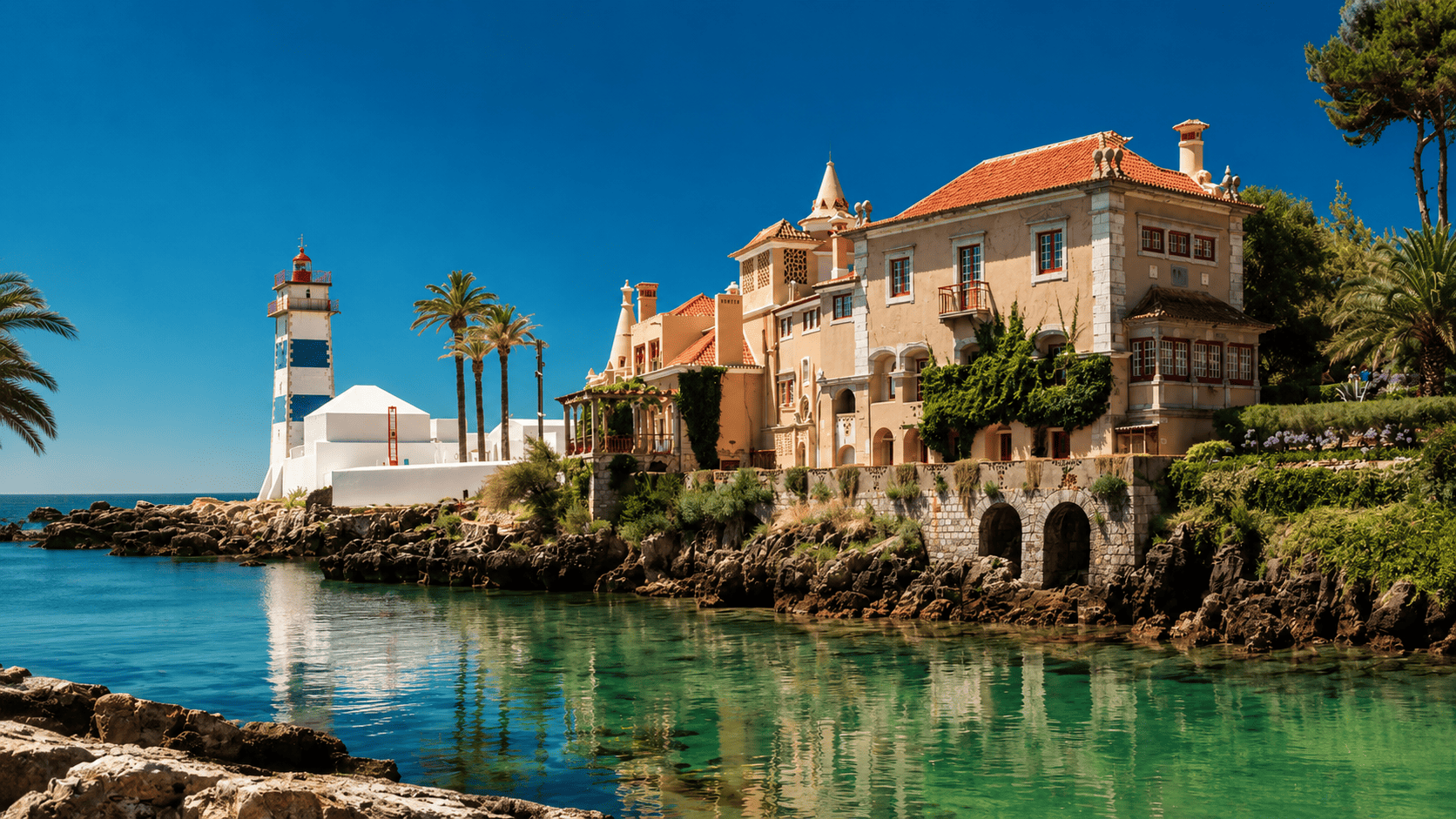
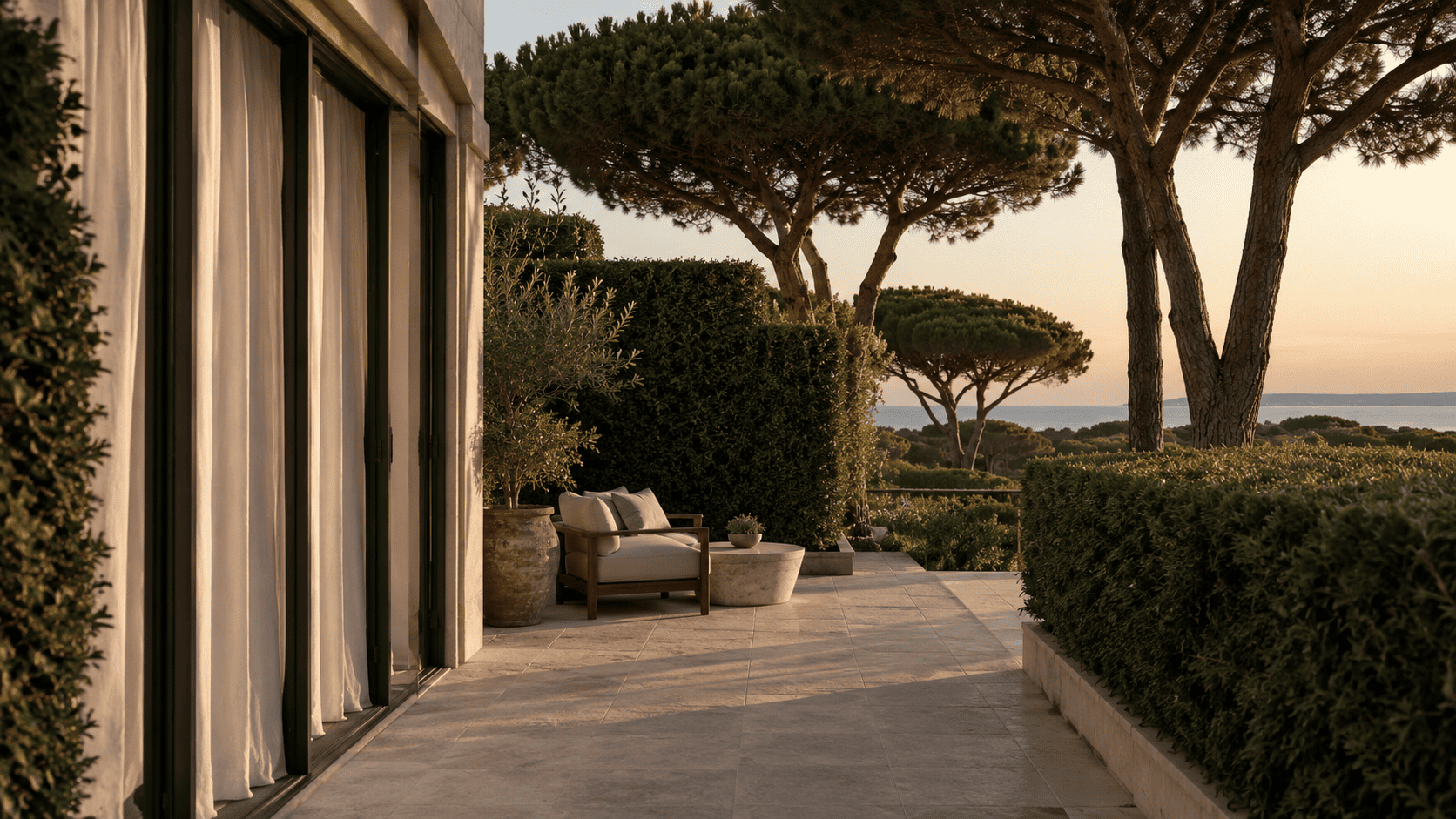
The stretch of coast west of Lisbon that Portuguese royalty chose as their summer retreat in the nineteenth century is now the country’s most established prime residential market. The Estoril Coast — Cascais at one end, Estoril and its belle-époque seafront at the other — draws a particular kind of buyer: not one chasing quick appreciation, but the family relocating for good, the executive who wants the Atlantic within commuting distance of the city, the retiree who wants weather, safety, and an international community already in place. Here’s how the two towns compare, who each suits, and what it costs to live and buy here.
Why do international families choose Cascais and Estoril?
Because the hardest parts of an international move are already solved here. Cascais holds one of the largest and most established international communities in Portugal, which means the practical scaffolding of relocation — English-speaking services, familiar food, a ready social network — is in place from week one.
Schools are the usual deciding factor, and most families choose the school first, then work backward into the neighborhood. The area covers all three major international pathways within a short coastal corridor: British and IB at St. Julian’s in nearby Carcavelos, the American curriculum at CAISL, IB at St. Dominic’s, and British options like IPS Cascais and King’s College, with TASIS and others just over the line toward Sintra. Annual fees broadly run from around €8,000 to €27,000 depending on school and age.
Beyond schooling, the appeal is straightforward: Portugal’s low crime and high quality of life, a mild Atlantic climate, Blue Flag beaches and a marina, the Paredão promenade linking Cascais to Estoril on foot, the wild dunes of Guincho and the Sintra-Cascais Natural Park at the back door, and a 40-minute train into Lisbon’s Cais do Sodré on the Cascais Line. It’s a place people live year-round, not a summer resort that empties in October.
Cascais or Estoril — what’s the difference?
They sit side by side and share the same train line, but they have different characters, and the choice between them is mostly about pace.
Cascais is the livelier of the two — a former fishing town built around a marina and a walkable center, with restaurants, shops, and daily convenience in easy reach. It suits buyers who want an urban rhythm and don’t mind summer crowds. Estoril is quieter and more residential, defined by its grand casino gardens, belle-époque architecture, and a more sedate, sophisticated feel. Between them, Monte Estoril offers elegant sea-view apartments and a calm, established atmosphere that many long-term residents prefer.
| | Cascais | Estoril |
Feel | Urban, lively, walkable | Quieter, residential, refined |
Draw | Marina, restaurants, town center | Casino gardens, belle-époque calm |
Suits | Buyers wanting convenience and energy | Buyers wanting space and quiet |
Summer | Busier, more tourism | Calmer year-round |
Which areas suit which buyers?
Within the two towns, a handful of areas serve distinct profiles. This is where getting the match right matters most:
Quinta da Marinha is a golf-anchored community, top of the market — detached villas, privacy, resort infrastructure, and the highest prices in the area. Birre sits just inland without the gate or service charges: larger plots, mature streets, the same natural-park proximity and school catchment, typically at a meaningful discount to Quinta da Marinha, which makes it a favorite for relocating families who want a garden. The Cascais and Estoril town centers suit buyers who want to walk to everything and don’t need land. Guincho and Malveira da Serra, out toward the cape, are for those who want nature, surf, and space over convenience.
Area | Character | Best for |
Quinta da Marinha | Golf, ultra-prime | Privacy, resort lifestyle |
Birre | Inland, leafy, family villas | Space and gardens near schools |
Cascais / Estoril centers | Walkable, urban | Convenience, lock-and-leave |
Guincho / Malveira da Serra | Wild, coastal, quiet | Nature and surf over amenities |
What does it cost to buy in Cascais and Estoril?
The Cascais e Estoril freguesia is among the most expensive addresses in Portugal, averaging roughly €7,000 per square meter as of June 2026, with prime and new-build stock well above that and Quinta da Marinha’s ultra-luxury villas reaching into five figures per square meter. What underpins those numbers is scarcity: buildable coastal land is limited and development is tightly controlled, so supply stays thin and values hold up rather than swinging. Budget an additional 7–10% of the purchase price for taxes and transaction costs.
Is Cascais a good investment in 2026?
For buyers focused on long-term stability rather than quick gains, it’s one of Portugal’s more resilient markets — precisely because it isn’t driven by speculation. Demand is anchored by genuine lifestyle and relocation buyers, supply is structurally constrained, and Cascais is currently Portugal’s most expensive rental market, which supports income as well as capital preservation. Long-let yields in the area typically run in the 4–5.5% range, with well-positioned short-let properties higher during the summer season, subject to local Alojamento Local rules.
Two points to be clear on. First, buying property here does not qualify for the Golden Visa — the property route closed with the 2023 reform, and that hasn’t changed. Second, non-resident buyers of residential property face a flat 7.5% IMT (transfer tax) from September 1, 2026, so acquisition costs should be modeled before making an offer. Cascais rewards buyers who value durability — of the location, the community, and the asset — over short-term upside.
FAQ
Is Cascais or Estoril better for families? Both work well; the choice usually follows the school and the pace you want. Cascais offers more energy and convenience, Estoril more quiet and space. Families wanting a garden often look inland to Birre.
How far is Cascais from Lisbon? About 40 minutes by train on the Cascais Line to Cais do Sodré, or roughly 30 minutes by car outside peak traffic.
Is Cascais expensive compared to the rest of Portugal? Yes. The Cascais e Estoril area is among the country’s priciest, reflecting limited coastal supply and sustained international demand, though inland areas within the municipality offer more accessible entry points.
Can foreign buyers purchase freely? Yes. There are no nationality restrictions; a Portuguese tax number (NIF) and a local bank account are the practical starting points.
Which area holds its value best? Supply-constrained prime pockets like Quinta da Marinha and Monte Estoril have historically held value well, given how little new stock comes to market near the coast.
The right move here usually starts with the specifics — the school run, the pace you want, whether you need a garden or prefer to walk to the marina — and works outward to the area, the budget, and the numbers. Luznur Capital advises foreign buyers and investors across Cascais, Estoril, and the wider Lisbon coast, from relocation purchases to prime and off-market acquisitions. To talk through where the Estoril Coast fits your plans, reach out at info@luznurcapital.com.
 (+351) 932 224 792
  info@luznurcapital.com