
 (+351) 932 224 792
  info@luznurcapital.com
 Portugal & the Arab World
United Arab Emirates
The ties between Portugal and the Emirates run deeper than the federation itself — written into the forts of the eastern coast in the sixteenth century, and, today, into the halls of Portugal's oldest university.
 ×
×

The Connection
From a sixteenth-century coast to Coimbra.
Portugal's presence on the Emirati coast belongs to the early sixteenth century, when its fleets held the trade routes of the Persian Gulf. It was not a gentle arrival — Khor Fakkan was taken in 1507 and defended fiercely by its people — and forts rose along the eastern coast at Khor Fakkan, Kalba, and Sharjah's Al Hisn. Their remains, and the Portuguese chronicler António Bocarro's 1635 maps of them, are the record of that century.
What makes this connection rare is what became of it. The Ruler of Sharjah, His Highness Sheikh Dr. Sultan bin Muhammad Al Qasimi — himself a historian — holds an honorary doctorate from the University of Coimbra, founded the first Center for Arabic Studies in Portugal there, and gifted its Joanina Library a rare 1565 manuscript by the Portuguese explorer Duarte Barbosa. In Khor Fakkan, he is building a Portuguese Castle Museum on the ruins of the old fort. A sixteenth-century conflict has become a twenty-first-century exchange — a truer measure of two nations than any treaty date.
The Emirates Today
One of the world's most dynamic economies.
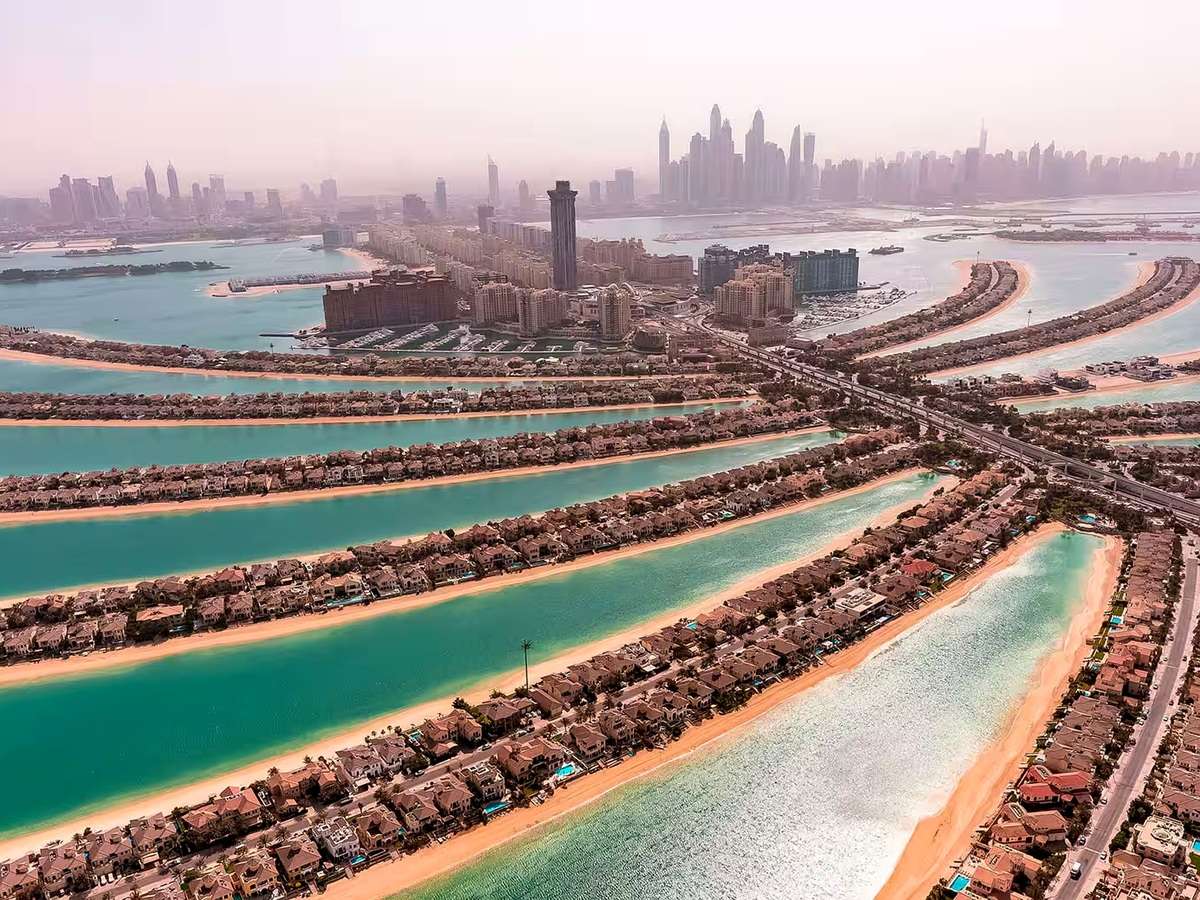
The UAE has built one of the most dynamic economies in the world — oil now accounts for less than a third of output, with the balance in logistics, tourism, finance, real estate, and technology, concentrated in Dubai and Abu Dhabi. World-class infrastructure, business-friendly law, and a position between East and West have made it a global hub for capital, and recent reforms have made residency there considerably easier.
For Portugal, the UAE is the most active corridor of all — not only Emirati nationals, but the vast expatriate wealth resident in Dubai and Abu Dhabi, increasingly looking to Portugal for a stable European base. What those families and family offices value here is a counterpart on the ground who understands both ends of the route.
Where This Meets Our Work
The Portuguese end of an Emirati mandate.
Emirati interest in Portugal tends to arrive in one of three forms, and each is handled differently. A family acquiring a second residence — on the Cascais coast, or a discreet estate in Comporta — where privacy and the right holding structure matter more than headline price. A family office, or a DIFC or ADGM structure, taking an allocation to Portuguese real estate for risk-adjusted return and capital preservation. And institutional or development capital, underwritten on the numbers, where sourcing and local execution decide the outcome.
In each, we are the party on the ground here who sources it, structures it, and holds it — with legal, tax, and immigration coordinated through dedicated partners. The corridor between the Gulf and Portugal is the one Luznur Capital was built around, held to the discretion the relationship deserves.
Reference
University of Coimbra honorary doctorate · 2018.
Official & further reading
Continue with Luznur Capital
Transparency · Confidentiality · Execution
Luznur Capital is the commercial name of Lusomena Investments, Unipessoal Lda., a licensed real estate brokerage holding AMI 22354. This page is offered for cultural and informational purposes and reflects the historic and diplomatic ties between Portugal and the United Arab Emirates; it does not constitute legal, tax, immigration, or investment advice.
Lusomena Investments, Unipessoal Lda. · AMI 22354 · info@luznurcapital.com · +351 932 224 792