
 (+351) 932 224 792
  info@luznurcapital.com
 Portugal & the Arab World
Sultanate of Oman
Diplomatic relations between Portugal and Oman began in 1979 — but their histories crossed four centuries earlier, when two seafaring nations contested the same harbour on the Indian Ocean.
 ×
×

The Connection
Where two seafaring empires met.
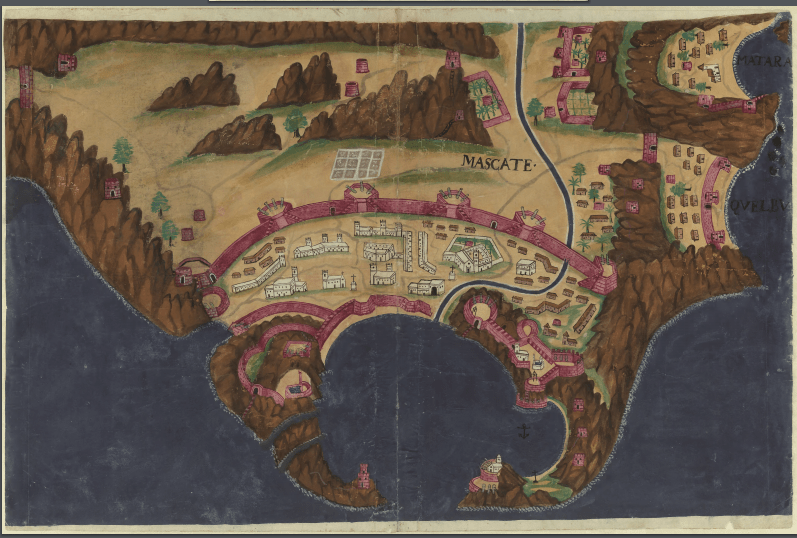
From 1507 to 1650, Portugal held Muscat — the great harbour on Oman's coast — as a stronghold of its Indian Ocean empire. The most visible trace still stands above the water: the twin forts the Portuguese raised over the harbour in the 1580s, Al Jalali and Al Mirani, and the meticulous plans of Muscat drawn by Portuguese cartographers such as António Bocarro in 1635.
But Oman's story is not one of subjection. In 1650 the Omanis expelled the Portuguese from Muscat — the moment the nation still marks as its National Day — and then did something remarkable: they built a maritime empire of their own, reaching down the East African coast to Zanzibar, which for a time served as Oman's capital. Oman is the oldest independent state in the Arab world, and its history with Portugal is best read as that of two seafaring nations whose paths crossed, and then diverged, across the Indian Ocean.
Oman Today
Diversifying, at its own pace.
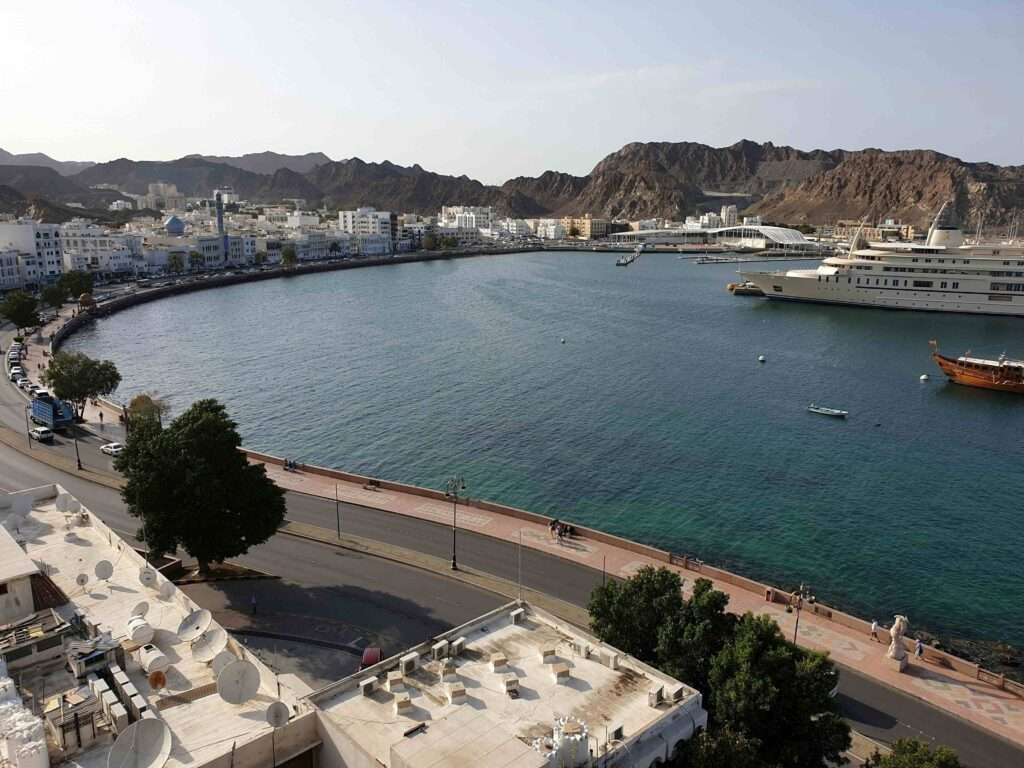
Oman is diversifying its economy under Vision 2040 — a long-term plan to move beyond oil toward tourism, renewable energy, and technology, backed by a new 5.2-billion-dollar Future Fund. Its character is distinct within the Gulf: quieter and more understated, inclined to natural beauty over spectacle — the fjords of Musandam, the mountains of Jabal Akhdar, and a growing collection of the region's finest resorts.
For Portugal, that temperament matters. Omani capital tends to be discreet, long-term, and drawn to authenticity over display — which aligns closely with Portugal's own appeal: a European market of genuine character rather than manufactured glamour. What Omani families and institutions value here is a counterpart who understands that preference.
Where This Meets Our Work
The Portuguese end of an Omani mandate.
Omani interest in Portugal tends to arrive in one of three forms, and each is handled differently. A family acquiring a second residence — on the Cascais coast, or a discreet estate in Comporta — where privacy and the right holding structure matter more than headline price. A family office, or institutional capital in the mould of the Oman Investment Authority, taking an allocation to Portuguese real estate for risk-adjusted return and capital preservation. And development capital, underwritten on the numbers, where sourcing and local execution decide the outcome.
For an Omani family who values discretion over display, Portugal’s Algarve is the natural parallel to Marbella — the Golden Triangle of Quinta do Lago and Vale do Lobo, or the calm of the Comporta coast — the same quality of life with a more private profile. We work across both coasts: in Portugal directly, and in Marbella through partnership.
In each, we are the party on the ground here who sources it, structures it, and holds it — with legal, tax, and immigration coordinated through dedicated partners. The corridor between the Gulf and Portugal is the one Luznur Capital was built around, held to the discretion the relationship deserves.
Reference
Diplomatic relations established · 26 October 1979.
Official & further reading
Continue with Luznur Capital
Transparency · Confidentiality · Execution
Luznur Capital is the commercial name of Lusomena Investments, Unipessoal Lda., a licensed real estate brokerage holding AMI 22354. This page is offered for cultural and informational purposes and reflects the historic and diplomatic ties between Portugal and the Sultanate of Oman; it does not constitute legal, tax, immigration, or investment advice.
Lusomena Investments, Unipessoal Lda. · AMI 22354 · info@luznurcapital.com · +351 932 224 792