 (+351) 932 224 792
  info@luznurcapital.com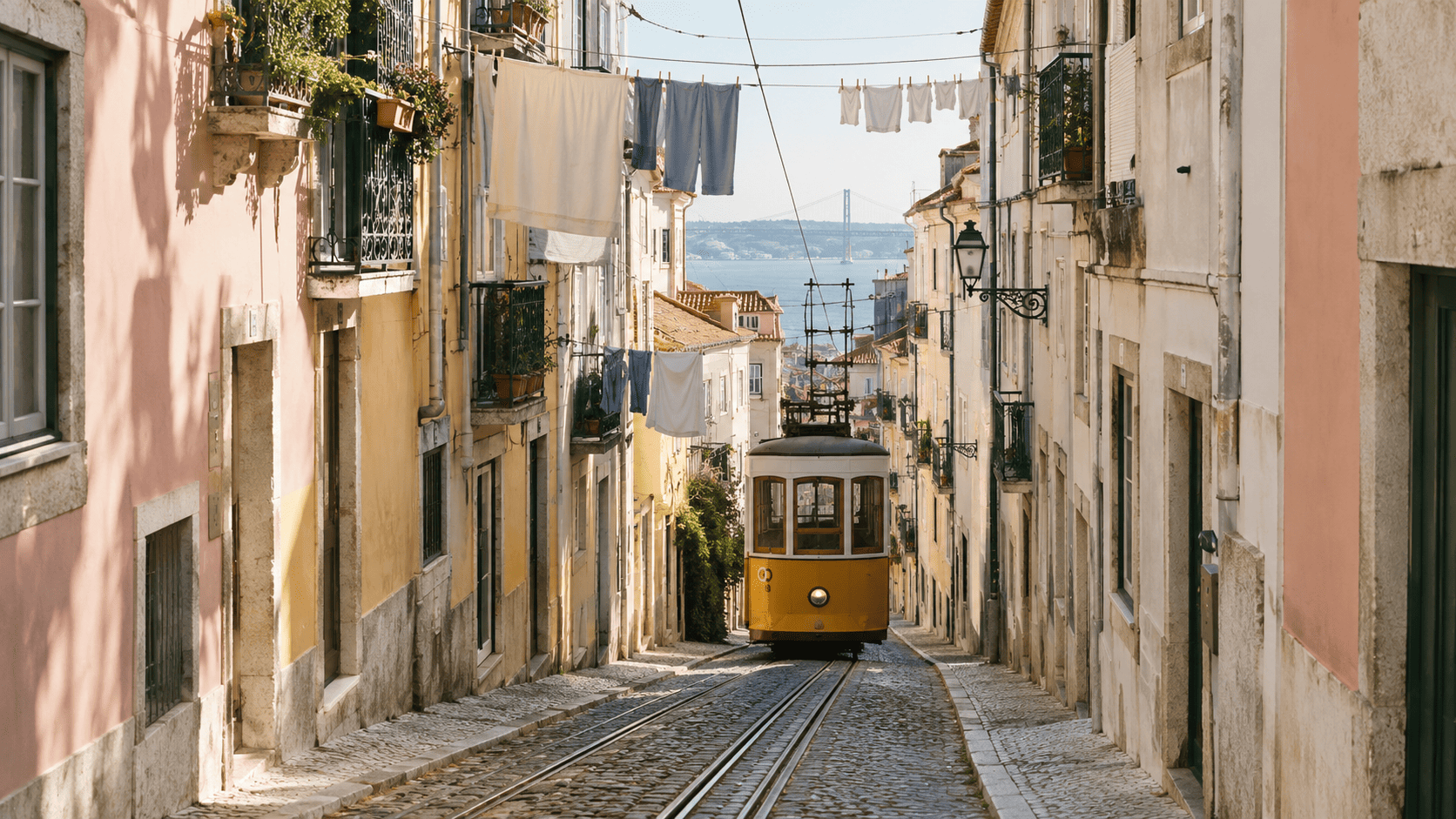
Lisbon ranks third in Monocle’s liveability survey
Lisbon ranks third in the world, and not for the weather
Monocle published its 2026 Quality of Life Survey in June, placing Lisbon third among the world’s twenty most liveable cities — behind Tokyo and Copenhagen, ahead of Vienna, Sydney, Zürich, Madrid, Paris, and Munich.
London, New York, and Los Angeles do not appear on the list at all.
The more interesting part is Monocle’s reasoning. The publication is explicit that Lisbon’s position is not simply a function of sunshine, food, and architecture. It attributes much of the city’s standing to roughly a decade of consistent governance and sustained investment — a judgment that matters considerably more to anyone taking a long view on the city than a ranking by itself would.
Quality of life produced by policy is durable. Quality of life produced by climate is available anywhere on the same latitude.
What Monocle credits
The survey names specifics rather than impressions.
Public transport. Sustained investment across metro, trams, and river services, with the city recently announcing its first new tram line in almost seventy years.
Cycling. Electric bikes overcoming the city’s topography, with regular bicycle journeys rising 500% between 2011 and 2021.
Connectivity. Lisbon airport functioning as a hub for transatlantic travel and routes to Africa, supported by long-standing ties across the Portuguese-speaking world — a structural advantage no other European capital holds in the same form.
Independent retail. Farmers’ markets, kiosks, and historic shops protected under the municipal Lojas Com História program. Monocle treats a healthy independent retail scene as a genuine contributor to urban quality rather than a decorative detail, and credits Lisbon specifically for protecting it.
Culture. A growing offer, with the new Centro de Arte Moderna at the Gulbenkian Foundation and the Arco fair drawing an international audience.
Safety. Monocle describes Lisbon as long ranking among the world’s safest cities, and identifies this directly as a driver of its appeal both to visitors and to people relocating.
Each of these is the result of a decision taken and sustained. That is the argument worth carrying away from the ranking.
The numbers
Monocle publishes comparative figures for every city, and Lisbon’s stand up well.
Sunshine: 2,806 hours annually — more than any other city in the top ten, and second across the entire top twenty behind only Perth. Ahead of Madrid at 2,769, Barcelona at 2,591, Sydney at 2,468, Vienna at 2,048, Milan at 1,915, Munich at 1,756, and Oslo at 1,668.
Monthly transport pass: €40.50 — the lowest of any city where Monocle lists the figure, against €49.20 in Madrid and €73.90 in Helsinki.
Airport: 144 international destinations, with particular depth on transatlantic and African routes.
Population: 550,000 in the city, roughly three million across the metropolitan area — which is part of the point. Lisbon delivers capital-city infrastructure at a scale that remains navigable, against Madrid’s 3.5 million and 7.5 million.
Two areas where the survey shows room to improve: urban green space at 25%, below most northern European cities though ahead of Paris at 15%; and bicycle modal share at 1.9%, where the 500% growth comes from a very low base. Both are being addressed — the green space through ongoing municipal programs, the cycling through continued electric bike adoption.
The 2026 top twenty
Tokyo first, Copenhagen second, Lisbon third, then Vienna, Sydney, Zürich, Madrid, Paris, Munich, Oslo, Stockholm, Milan, Barcelona, Singapore, Amsterdam, Helsinki, Seoul, Melbourne, Vancouver, and Perth tied with Kyoto in twentieth.
The absences inform the ranking. Monocle notes that North American cities struggled on crime, inequality, and housing, with Vancouver the only one to qualify. London and Los Angeles did not make the list.
Three Iberian cities feature — Lisbon third, Madrid seventh, Barcelona thirteenth — the strongest southern European showing in the survey’s recent history.
About the method
Monocle’s survey is nineteen years old and was conceived deliberately as an alternative to rankings built on tax rates, GDP, and living costs. Its premise is that urban life should also be judged on culture, retail, hospitality, and architecture.
The method is a thirty-question survey sent to trusted correspondents in forty cities, covering safety, connectivity, governance, and green space — and, characteristically, whether you can get a decent meal and a drink after ten at night. The 2026 edition gave particular weight to excitement, urban ambition, and security, supplemented by data from a property research house and a cycling index.
This is a qualitative exercise with quantitative support rather than a data model, and Monocle says so, describing the result as the beginning of a debate rather than the end of one. It should be read as informed editorial judgment, which is both its limitation and the reason it carries weight that an algorithm would not.
What success costs, and what Portugal is doing about it
Monocle pairs its assessment with an observation that deserves attention rather than avoidance: a rise in new arrivals has put pressure on services, housing construction is lagging demand, and the gap between local and expatriate cost of living needs closing.
That is what happens to a city that becomes genuinely desirable, and it is not unique to Lisbon. Barcelona is restricting tourist apartments from 2028. Amsterdam is building too slowly for its own demand. Copenhagen’s new council has restricted hotel development. Zürich’s vacancy rate stands at 0.1%. Vienna, Munich, and Madrid all name housing as their principal challenge. Every city in Monocle’s top ten is managing the same problem.
What distinguishes Portugal is that the state has responded, visibly and in sequence.
The Golden Visa property route closed in October 2023. The non-habitual resident regime was replaced by the narrower IFICI in 2024. Short-term rental containment zones were applied where registration density was highest, with municipalities required to revise their frameworks by the end of 2026. The naturalization period moved from five years to ten in May 2026. From September 2026, buyers who are not Portuguese tax residents pay a flat 7.5% IMT on residential property.
And on the supply side, Decree-Law No. 97/2026 cut VAT on qualifying residential construction from 23% to 6% and introduced investment contracts offering tax benefits for up to 25 years to investors who build or rehabilitate for letting — the longest-duration housing incentive Portugal has offered.
A functioning state responding to the consequences of its own success is a positive signal, not a negative one. The alternative — a city that attracts capital and does nothing about the pressure it creates — is the position several higher-priced European markets are in.
For a buyer the practical conclusion is straightforward. The qualities that put Lisbon third in the world are structural and will persist. The regulatory treatment of international buyers has moved four times in three years and should be underwritten on current rules rather than projected ones. Both of those are statements about a market worth being in, and about how to enter it properly.
The metropolitan area is wider than the city
One consequence of Lisbon’s success is that the qualities Monocle credits — safety, climate, connectivity, a functioning public realm — now extend well beyond the municipal boundary, and the best positions frequently sit outside it.
Cascais and Estoril, twenty-five minutes from the airport, where most of Portugal’s international schooling is concentrated and the town operates year-round rather than seasonally. Savills placed Cascais 23rd in Europe in its 2026 next-generation wealth index this year, alongside Monaco, Geneva, and St. Moritz — the only Portuguese entry besides Lisbon itself.
Sintra and the Linhó corridor, trading proximity to the coast for space, gardens, and gated communities within the same school and airport geography.
The Setúbal peninsula and the Arrábida, roughly thirty-five minutes south, where natural park designation caps development by law and secures views and density in a way no covenant can, at a fraction of Cascais pricing.
Comporta and the Alentejo coast, an hour out, where sixty kilometers of near-empty Atlantic beach sit behind structural scarcity rather than marketing.
None of these competes with prime Lisbon. They extend it. A client choosing between Chiado and Cascais is choosing between two expressions of the same advantage, and the right answer depends on whether they want a city, a town, or a coast.
What the ranking is and is not
Monocle measures whether a city is good to live in. That is a different question from whether its property is well priced, and the two should not be conflated.
On pricing, the picture is worth holding alongside. Lisbon’s general market is inexpensive by European standards — Deutsche Bank Research Institute data places city-center apartments 20th of 28 European cities, below Berlin, Madrid, Rome, and Dublin. Its prime segment is not: on price per square foot, Lisbon ranks ahead of Los Angeles, San Francisco, Miami, Madrid, Berlin, and Dubai. Rental yields in Lisbon are the lowest in Portugal at 4.3% gross, which is what the market with the lowest perceived risk looks like.
A buyer should read the ranking as confirmation that the demand driving this market is grounded in something real and independently assessed — not as evidence that any particular property represents value.
What it does establish is that an exercise running for nineteen years, built on correspondent judgment rather than tax rates, placed Lisbon above Vienna, Zürich, Madrid, Paris, and every North American city in the world.
How Luznur Capital works
Luznur Capital, a trading name of Lusomena Investments, Unipessoal Lda., is a real estate brokerage and advisory firm licensed by IMPIC under AMI 22354 and a registered member of APEMIP.
Reading rankings against pricing. A liveability ranking confirms a city is good to live in. Whether a specific property is correctly priced is a separate question, and in Lisbon the prime premium over the general market is unusually wide.
Matching the position to the requirement. The same advantages extend from Chiado to Cascais to the Arrábida, and the right location depends on whether a client wants a city address, a year-round town with schooling, or coastal privacy. Establishing that before the search begins is the work.
Sequencing the residency question first. Whether a client will be Portuguese tax resident determines the acquisition rate, the income position, and sometimes the location. That is settled with legal and tax partners before viewings.
Off-market access. In prime Lisbon, Cascais, the Arrábida, and Comporta, a meaningful share of the better property never reaches a portal.
FAQ
Where does Lisbon rank in Monocle’s 2026 Quality of Life Survey?
Third, behind Tokyo and Copenhagen and ahead of Vienna, Sydney, Zürich, Madrid, Paris, and Munich. London, New York, and Los Angeles do not appear in the top twenty, with Vancouver the only North American city listed.
Why does Monocle rank Lisbon so highly?
The publication is explicit that it is not simply climate. It credits roughly a decade of consistent governance: sustained public transport investment including the first new tram line in almost seventy years, a 500% rise in cycling journeys between 2011 and 2021, airport connectivity across the Atlantic and to Africa, a protected independent retail culture, a growing cultural offer, and a long-standing position among the world’s safest cities.
How much sunshine does Lisbon get?
2,806 hours annually on Monocle’s figures — more than any other city in the top ten and second across the top twenty behind only Perth, ahead of Madrid at 2,769 and Barcelona at 2,591.
How does Monocle measure quality of life?
Through a thirty-question survey sent to correspondents in forty cities covering safety, connectivity, governance, green space, and hospitality, including whether a decent meal and drink are available after ten at night. The 2026 edition weighted excitement, urban ambition, and security, with supplementary data from a property research house and a cycling index. It is a qualitative exercise rather than a data index, as the publisher states.
What challenges does the survey identify for Lisbon?
Pressure on services from new arrivals, housing construction lagging demand, and a gap between local and expatriate cost of living. Every city in Monocle’s top ten faces a comparable housing challenge — Barcelona is restricting tourist apartments, Copenhagen has restricted hotel development, and Zürich’s vacancy rate stands at 0.1%.
How has Portugal responded to housing pressure?
In sequence and visibly. The Golden Visa property route closed in 2023, NHR was replaced by IFICI in 2024, short-term rental containment zones were applied where density was highest, the naturalization period doubled in May 2026, and a flat 7.5% IMT for non-tax-resident buyers applies from September 2026. On supply, Decree-Law No. 97/2026 cut construction VAT from 23% to 6% and introduced 25-year tax benefits for investors building or rehabilitating for rental.
Does a high liveability ranking mean Lisbon property is a good investment?
Not directly. The survey measures whether a city is good to live in, not whether property is well priced. Lisbon’s general market is inexpensive by European standards, but its prime segment ranks above Los Angeles, San Francisco, Miami, Madrid, and Berlin on price per square foot, and Lisbon yields are the lowest in Portugal at 4.3% gross.
Which areas around Lisbon offer the same advantages?
Cascais and Estoril, twenty-five minutes from the airport with most of Portugal’s international schooling and year-round town life — Savills placed Cascais 23rd in Europe in its 2026 wealth hubs index. Sintra and the Linhó corridor for space within the same geography. The Setúbal peninsula and Arrábida, where natural park designation caps development. And Comporta and the Alentejo coast for coastal privacy.
Which other European cities ranked highly?
Copenhagen second, Vienna fourth, Zürich sixth, Madrid seventh, Paris eighth, Munich ninth, Oslo tenth, Stockholm eleventh, Milan twelfth, Barcelona thirteenth, Amsterdam fifteenth, and Helsinki sixteenth. Three Iberian cities feature, the strongest southern European showing in the survey’s recent history.
What does Lisbon score less well on?
Urban green space at 25%, below most northern European cities though ahead of Paris at 15%, and bicycle modal share at 1.9%, where rapid growth comes from a very low base. Both are the subject of ongoing municipal investment.
Is this article investment advice?
No. It reports publicly available journalism as of October 2026 and is not a recommendation regarding any property, city, or transaction. City rankings are not valuations and do not indicate investment merit.
DISCLAIMER
Important information
This article is provided for general information only and reflects publicly available information as of October 2026. It does not constitute investment, financial, tax, or legal advice, and is not a recommendation regarding any property, city, or transaction.
Findings attributed to Monocle’s Quality of Life Survey 2026, published 24 June 2026, are reported as published by Monocle, which retains copyright in that publication. The survey is a qualitative editorial exercise based on correspondent judgment with supplementary data, as the publisher describes, rather than a quantitative index. Rankings are not valuations, forecasts, or indicators of investment merit, and do not indicate the suitability of any location for any purpose.
Comparative city statistics are reported as published by Monocle and reflect that publication’s sources and definitions. Property price and yield figures cited derive from separate sources including the Deutsche Bank Research Institute, Savills Research, idealista, Instituto Nacional de Estatística, and Banco de Portugal, which apply differing methodologies and are not directly comparable with one another or with the survey.
Portuguese regulatory provisions referenced, including Decree-Law No. 97/2026, Organic Law No. 1/2026, and the IFICI regime, are subject to amendment, and Portugal has revised rules affecting foreign buyers repeatedly since 2023.
Luznur Capital is a trading name of Lusomena Investments, Unipessoal Lda., a real estate brokerage and advisory firm licensed by IMPIC under AMI 22354 and a registered member of APEMIP. It is not a law firm or tax practice. Independent legal and tax advice should be obtained before any acquisition or relocation decision.
Reports Monocle’s Quality of Life Survey 2026, a qualitative editorial exercise rather than a quantitative index; Monocle retains copyright. Rankings are not valuations or indicators of investment merit. Not investment, tax, or legal advice. Luznur Capital (Lusomena Investments, Unipessoal Lda., AMI 22354).
Buying into a city that earned its position
What puts Lisbon third in the world is structural — governance, safety, connectivity, and a public realm that works. What changes is the regulatory treatment of the buyers those qualities attract, which has moved four times in three years.
Luznur Capital, a trading name of Lusomena Investments, Unipessoal Lda. (AMI 22354), advises international buyers and investors across Lisbon, Cascais, Sintra, the Setúbal peninsula, Comporta and the Alentejo, the Algarve including Quinta do Lago and Tavira, the Silver Coast, Porto and Braga, the Douro and the Minho, and Madeira, including off-market opportunities, with coordinated legal, tax, and immigration partners — and on mandates of any size in any region of mainland Portugal and the islands.
To discuss a specific mandate, contact info@luznurcapital.com.
Tag:
Category:
- Alentejo (1)
- Algarve (15)
- Almancil (5)
- Buyer Guides by Nationality (6)
- Buying in Portugal (23)
- Cascais (6)
- Comporta (6)
- Costs & Fees (2)
- Country Comparisons (3)
- D7 Visa (5)
- D8 Visa (4)
- Diplomacy (1)
- Eastern Algarve (3)
- Economy (9)
- Estoril (5)
- Foreign Bilateral Relations (2)
- GCC (2)
- GCC Investors Portugal (2)
- Golden Triangle Algarve (5)
- Golden Visa (2)
- Golden Visa Portugal (2)
- High-Profile Clients (1)
- HNWIs (16)
- International Buyers (24)
- Investing in Portugal (29)
- Investment (6)
- Investment & Advisory (18)
- Investment & Structuring (1)
- Lisbon (5)
- Lisbon (11)
- Market Data (9)
- Market Guides (8)
- Porto (6)
- Portugal (16)
- Quinta da Marinha (6)
- Quinta do Lago (11)
- Real Estate Portugal (32)
- Relocating to Portugal (14)
- Relocation (1)
- Residency & Investment (2)
- Selling in Portugal (2)
- Sotavento Algarve (3)
- Tavira (7)
- Tourism (4)
- Vale do Lobo (5)
- Vila Real de Santo António (1)
- Vilamoura (5)
- Wealth Management (1)
- Wealth Management Portugal (4)