 (+351) 932 224 792
  info@luznurcapital.com
Portugal for GCC Investors: A Practical Guide
Most guides to buying property in Portugal are written for a reader escaping a high-tax country. For a buyer coming from the Gulf, that reader is not you, and much of the standard advice is therefore either irrelevant or quietly misleading. Coming from a jurisdiction with no personal income tax, Portugal’s tax picture is a cost to be managed, not a benefit to be captured. The real case for Portugal lies elsewhere — in what a European base, a scarce real asset, and a stable legal system are worth to a family whose wealth is already well-served at home. This guide sets out what actually applies to a GCC buyer, and what doesn’t.
Why would a Gulf family look at Portugal at all?
Four reasons, and it’s worth being clear that tax is not among them.
A European base. A home in Lisbon, Cascais, or the Algarve that gives a family a genuine footing in the EU — for education, for summers, for medical access, for optionality.
A real asset in a hard currency. Euro-denominated property in a supply-constrained prime market, held for preservation rather than yield. For a family whose assets are heavily concentrated in a USD-pegged region, that is a diversification decision as much as a property one.
Legal and political stability. A functioning legal system, secure title, no history of arbitrary expropriation or capital controls aimed at foreign investors.
Discretion. Portugal is not a market where prime transactions are conducted in public. For families who require privacy, that matters.
Do GCC nationals need a visa for Europe?
This is where a widespread assumption needs correcting, and getting it wrong derails planning.
Only UAE passport holders currently enjoy visa-free short-stay access to the Schengen Area. Nationals of Saudi Arabia, Qatar, Kuwait, Bahrain, and Oman should not assume the same; liberalization has been discussed but must be verified against the current rule for each passport before travel is planned. Separately, once ETIAS is fully in force, even visa-exempt travelers will need to obtain that authorization in advance — it is a travel authorization, not a visa, and not a substitute for one.
And a point that matters for the many non-GCC nationals resident in the Gulf: residence in the UAE or Saudi Arabia does not confer visa-free access. An Indian citizen living in Dubai, or an Egyptian citizen in Riyadh, still applies for a Schengen visa on the basis of their passport, with the residence permit supporting rather than replacing the application.
Short-stay access is in any case capped at 90 days in any 180 — enough for holidays, not for living. That is a separate question.
Can property in Portugal secure residency?
No. Portugal’s Golden Visa real estate route closed in October 2023. Buying a home, at any value, no longer grants or contributes to residency. Any source suggesting otherwise is working from outdated rules.
Residency, if wanted, is a separate decision with its own routes:
| Route | Requirement | Best for |
|---|---|---|
| Golden Visa (fund) | €500,000 in a regulated Portuguese fund, no real estate | Optionality without relocating; ~7 days/year presence |
| Golden Visa (cultural) | €250,000/€200,000 donation | Lowest entry; a cost, not an investment |
| D7 | Stable passive income; genuine residence | Families actually relocating |
| D8 | Qualifying remote income | Remote-working families |
Two things worth understanding. The Golden Visa is the only route that doesn’t require living in Portugal — roughly a week a year sustains it. And after five years of legal residence, permanent residency remains available, an enduring right to live and work in Portugal and across the EU. Citizenship is a longer horizon: under the May 2026 Nationality Law, generally ten years for most non-EU nationals. For most Gulf families, the honest framing is that residency here is about optionality and a European base, not urgency.
What does Portugal actually cost a Gulf buyer in tax?
This is the section most guides get wrong for this reader, because they’re written for someone fleeing a 45% income tax regime.
Coming from a zero-income-tax jurisdiction, there is no tax saving in Portugal to be captured. What there is, is a set of costs to be modeled honestly:
From September 1, 2026, non-resident buyers of residential property face a flat 7.5% IMT (transfer tax), plus stamp duty and transaction costs — budget 7–10% of the purchase price in total. Annual property tax (IMI) applies, with AIMI on higher-value holdings. Rental income from a Portuguese property is Portuguese-source and taxed here regardless of where the owner lives. And if the family spends more than 183 days a year in Portugal, tax residency follows — which changes the picture entirely, and is the single most important line to watch.
The NHR regime that once drew wealthy foreigners is closed, replaced by a narrower incentive (IFICI) aimed at specific professions. It is unlikely to be relevant to most Gulf families.
The right conclusion is not that Portugal is expensive — it is that Portugal should be chosen for the asset and the base, with the tax modeled as a known cost, and the days counted carefully.
Is Sharia-compliant financing available in Portugal?
Not domestically, and it’s better to say so plainly than to imply otherwise. Portugal has no meaningful Islamic finance market; conventional Portuguese mortgages are interest-based and therefore unsuitable for a family requiring riba-free structures.
In practice there are two workable paths. Most Gulf buyers at the prime end purchase in cash, which sidesteps the question entirely. Where financing is wanted, it is typically arranged outside Portugal — through Gulf-based Islamic banks or specialist international brokers who structure Sharia-compliant facilities (Murabaha, Ijara, or diminishing Musharaka) secured against the asset. These are established instruments internationally, but they are arranged by the family’s own bank or a specialist, not by a Portuguese lender.
How does succession work, and does it conflict with Islamic principles?
This deserves attention, because Portuguese law will not simply defer to a family’s expectations.
Portugal applies forced heirship: a fixed portion of an estate is reserved for certain heirs by law, regardless of the will. This is a civil-law rule, not a religious one, and its fixed shares do not track Islamic inheritance principles. A family that assumes its home-country arrangements will govern a Portuguese asset may be surprised.
Portugal also does not recognize Anglo-American trusts in the way common-law jurisdictions do — with one exception, Madeira, which is the only Portuguese jurisdiction where a trust can actually be incorporated and which offers a legitimate EU-compliant, substance-based holding regime. Holding a property through a corporate structure can shift the succession question to the entity’s shares and their governing law, giving a family materially more control.
Whether that overhead is justified depends on the family and the asset. What is not optional is planning it at acquisition rather than discovering it later. This is precisely the kind of work that belongs with qualified legal and tax counsel from the outset.
Where do Gulf families buy, and what does it cost?
The prime markets that suit this buyer profile are relatively few:
| Market | Character | Suits |
|---|---|---|
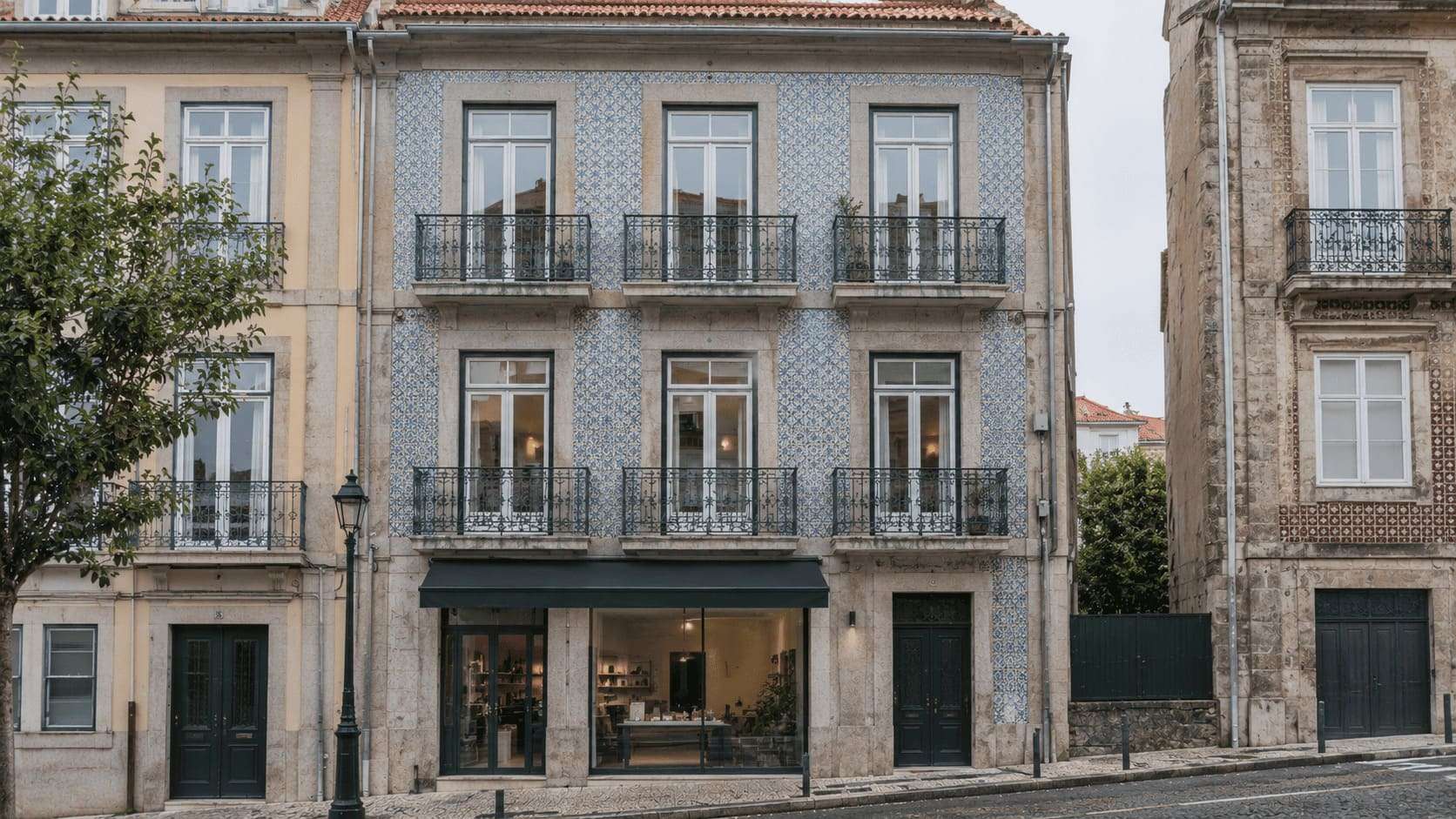
| Lisbon (Avenida, Príncipe Real, Chiado) | Urban prime, cultural | City base, education, hospitals |
| Cascais / Estoril | Coastal, international, family | Relocation, schools, year-round living |
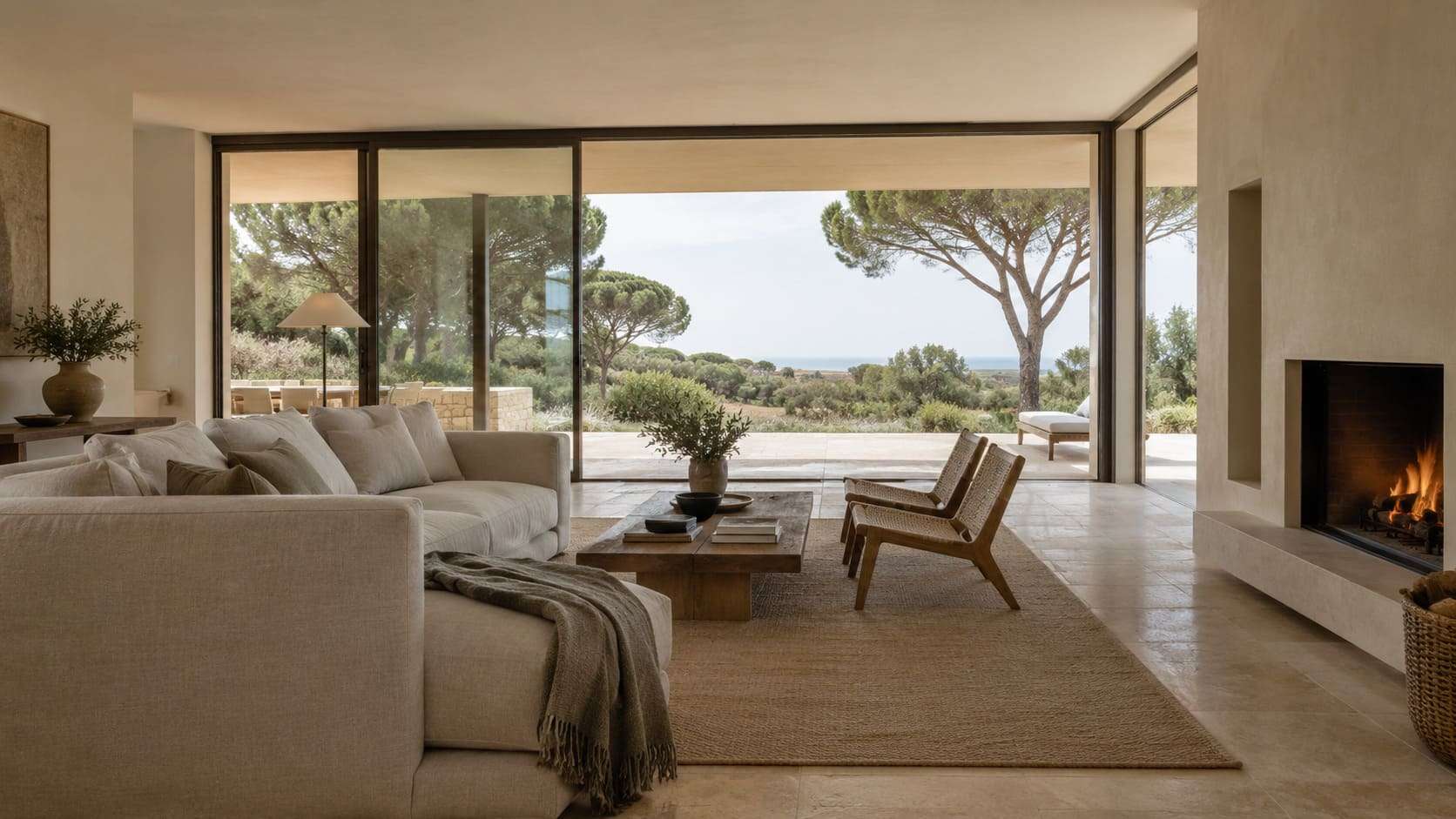
| Algarve (Quinta do Lago, Vale do Lobo) | Golf, beach, gated, private | Summers, privacy, family compound |
| Tróia and Comporta | Discreet, understated, low-density | Seclusion; the anti-resort |
| Madeira | Island; also the MIBC holding regime | Structure plus a genuine footprint |
Prime entry is typically from around €1 million, with Algarve villas and Lisbon penthouses running substantially higher. At this level, much of the best stock never reaches a public portal.
Practical matters that actually come up
Flights: Lisbon is well connected to the Gulf, with direct service from the major hubs — the Algarve is reached via Faro, roughly two and a half hours from Lisbon by car, or by connecting flight.
Season: the Algarve peaks in July and August; Ramadan and the Gulf summer exodus shape when families actually want to be here, and that should inform both viewing schedules and rental assumptions.
Faith and food: Lisbon has an established mosque and a growing halal offering, and the international communities in Cascais and the Algarve are well served, though the Algarve’s provision is thinner than the capital’s. This is worth verifying against the specific area under consideration rather than assumed.
Currency: with Gulf currencies pegged to the dollar, a euro purchase is effectively a USD/EUR decision. Timing and hedging on a multi-million-euro transfer are worth real thought, not an afterthought.
A framework for deciding
- Be clear that this is not a tax play. If tax minimization is the goal, Portugal is the wrong instrument.
- Separate the property from the residency. One does not deliver the other.
- If residency is wanted, match the route to the life — the fund route for optionality, D7/D8 for an actual move.
- Verify the visa position for the specific passport. Only the UAE is visa-exempt for short Schengen stays.
- Model the full cost: 7.5% IMT for non-residents from September 2026, plus annual holding taxes.
- Settle financing early. If riba-free structures are required, arrange them from the Gulf or through a specialist — Portugal will not provide them.
- Plan succession at acquisition. Forced heirship applies whether or not the family expects it.
- Count the days. Tax residency at 183 days changes everything.
FAQ
Can a GCC national get residency by buying property in Portugal? No. The real estate route to the Golden Visa closed in 2023. Residency runs through the €500,000 fund route, the cultural donation route, or the D7/D8 visas, all separate from any property purchase.
Do Emiratis need a visa to visit Portugal? UAE passport holders are generally visa-exempt for short Schengen stays, subject to ETIAS once fully in force. Other GCC nationals should verify their current position rather than assume the same.
Are there halal mortgages in Portugal? Not from Portuguese lenders. Most Gulf buyers purchase in cash; where financing is needed, Sharia-compliant facilities are arranged through Gulf banks or specialist international brokers against the Portuguese asset.
Will Portuguese law respect our inheritance wishes? Not automatically. Portugal applies forced heirship, reserving fixed shares for certain heirs, and its rules do not mirror Islamic inheritance principles. Structuring at acquisition is how families retain control.
Does owning a home in Portugal make us Portuguese taxpayers? Not by itself. Tax residency generally turns on spending 183 or more days a year in Portugal. Rental income from the property is taxed in Portugal regardless. Properties in Portugal pay a yearly Tax (property tax IMI and AIMI).
Is Portugal a discreet market? At the prime end, yes. Much of the best property transacts privately, and buyers who require confidentiality are accommodated as a matter of course.
Nothing here is legal, tax, or immigration advice. Rules in this area move — the Golden Visa, NHR, and citizenship frameworks have all changed within three years — and every family’s position turns on its own facts.
Considering Portugal?
The decisions worth getting right here — the asset, the structure, the succession plan, the residency question — are best taken together and early, with the right counsel in the room. Luznur Capital advises international families and family offices on Portuguese real estate, including off-market acquisitions, alongside dedicated legal, tax, and immigration partners, and under strict confidentiality. To discuss a mandate, reach out at info@luznurcapital.com.
Category:
- Alentejo (1)
- Algarve (15)
- Almancil (5)
- Buyer Guides by Nationality (6)
- Buying in Portugal (23)
- Cascais (6)
- Comporta (6)
- Costs & Fees (2)
- Country Comparisons (3)
- D7 Visa (5)
- D8 Visa (4)
- Diplomacy (1)
- Eastern Algarve (3)
- Economy (9)
- Estoril (5)
- Foreign Bilateral Relations (2)
- GCC (2)
- GCC Investors Portugal (2)
- Golden Triangle Algarve (5)
- Golden Visa (2)
- Golden Visa Portugal (2)
- High-Profile Clients (1)
- HNWIs (16)
- International Buyers (24)
- Investing in Portugal (29)
- Investment (6)
- Investment & Advisory (18)
- Investment & Structuring (1)
- Lisbon (11)
- Lisbon (5)
- Market Data (9)
- Market Guides (8)
- Porto (6)
- Portugal (16)
- Quinta da Marinha (6)
- Quinta do Lago (11)
- Real Estate Portugal (32)
- Relocating to Portugal (14)
- Relocation (1)
- Residency & Investment (2)
- Selling in Portugal (2)
- Sotavento Algarve (3)
- Tavira (7)
- Tourism (4)
- Vale do Lobo (5)
- Vila Real de Santo António (1)
- Vilamoura (5)
- Wealth Management (1)
- Wealth Management Portugal (4)