Portugal and Qatar began their diplomatic relations in 1982.
The Ambassador of Portugal to Qatar is H.E. Paulo Neves Pocinho.
The Ambassador of Qatar to Portugal is H.E. Saad Ali Hilal Al-Muhannadi.
Historical sources provide compelling evidence of Qatar’s long-standing strategic importance in regional and global trade networks. The earliest known document referring to trade in Qatar dates to the 17th century, written by Father Anseline, a Portuguese merchant, during his visit to Al Zubarah, where he recorded the purchase of horses, dates, linens, and above all, pearls—highlighting Qatar’s role in commerce and the pearl trade.
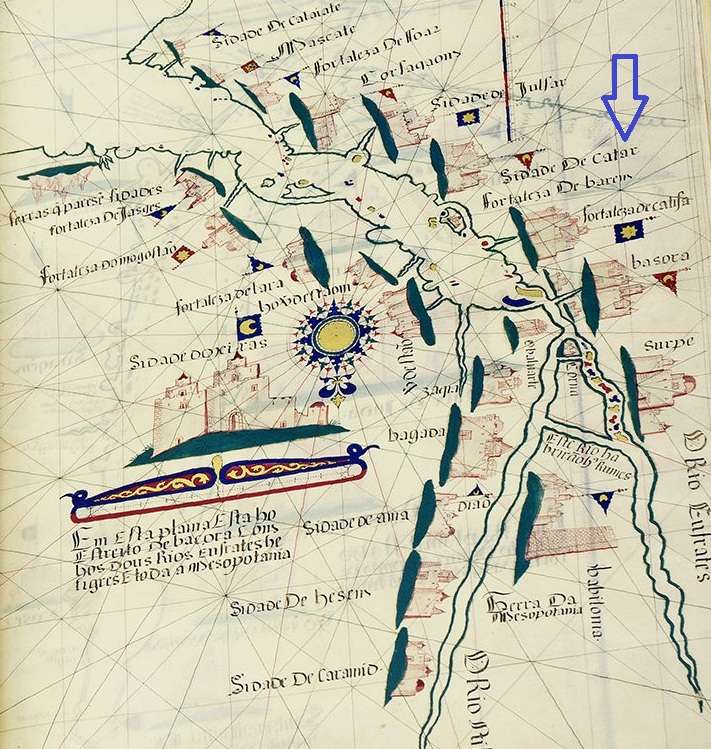
Portuguese travelers made references to Qatar as early as the 1580s and 1590s, and the territory appears in European cartography as a single fort in Lázaro Luís’s World Atlas of 1596. References to Qatar become more frequent after 1602, following the Portuguese loss of Bahrain to the Safavids. During this period, Qatar was used by the Portuguese as a strategic base for operations in the Gulf, including raids on Bahrain and the taxation of merchant vessels navigating regional trade routes.
These historical accounts underscore Qatar’s strategic geographic position from early times—situated at the crossroads between Asia and Europe—and help explain its enduring relevance in trade, diplomacy, and regional influence.
Lázaro Luís, Atlas de Lázaro Luís, 1563
Qatar Today: A Strategic Partner in a Global Context
Qatar occupies a central position in global economic and diplomatic networks. Its geographic location in the Arabian Gulf—long recognized for its strategic value—continues to underpin its role as a hub for energy, finance, logistics, and international dialogue.
Relations between Portugal and Qatar are active and constructive, marked by growing cooperation in trade, services, investment, and culture. Portugal remains a trusted supplier of goods and expertise, while the presence of Portuguese nationals in Qatar and the exchange of high-level official visits reflect the depth and maturity of bilateral relations.
Qatar’s contemporary relevance is driven by a diversified and forward-looking economy. As the world’s leading exporter of liquefied natural gas, Qatar combines energy leadership with sustained investment in infrastructure, tourism, finance, and innovation—positioning the country as a key actor in global markets and international affairs.
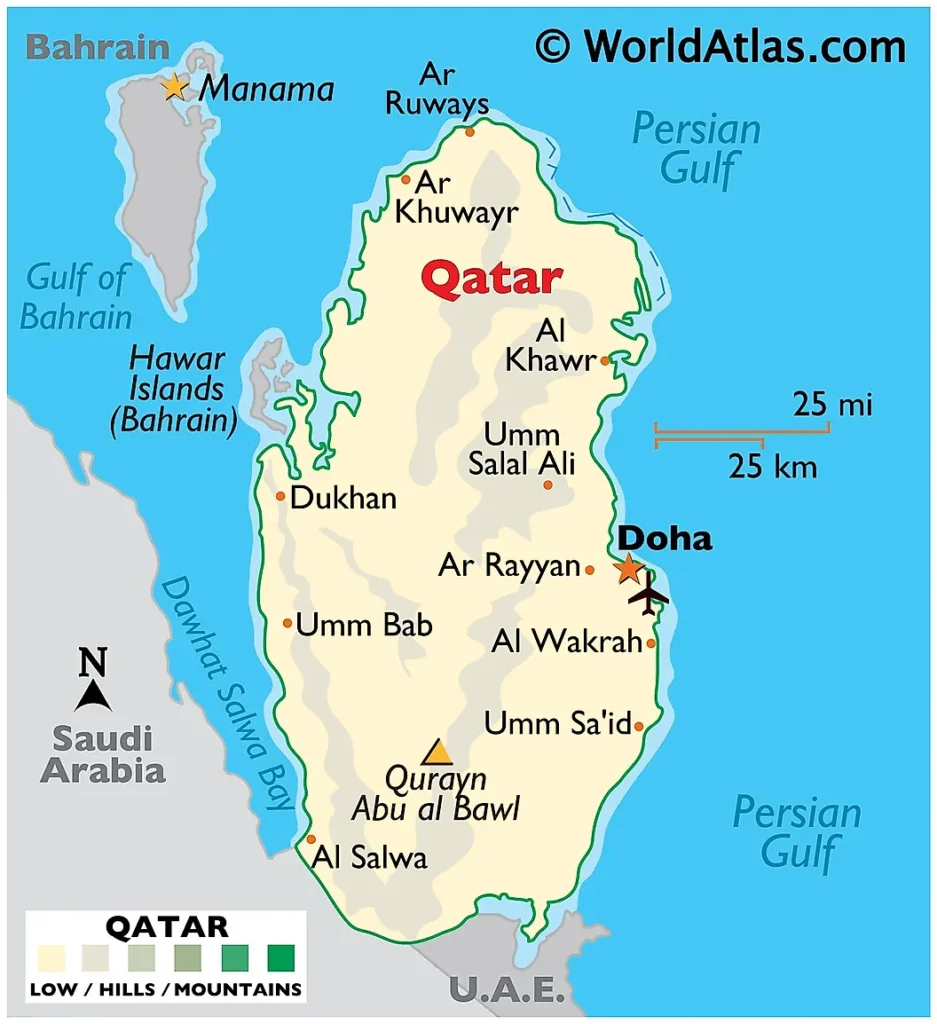
This modern map of Qatar serves as a reminder that the same territory once recorded in early Portuguese cartography now stands as a globally connected state, bridging regions, economies, and cultures.
Source: World Atlas
Since the launch of Qatar National Vision 2030 in 2008, the country has undertaken a comprehensive transformation aimed at sustainable development, economic diversification, and human capital growth. This long-term vision has positioned Qatar as an international hub for talent, investment, and innovation, supported by modern infrastructure and a high quality of life.
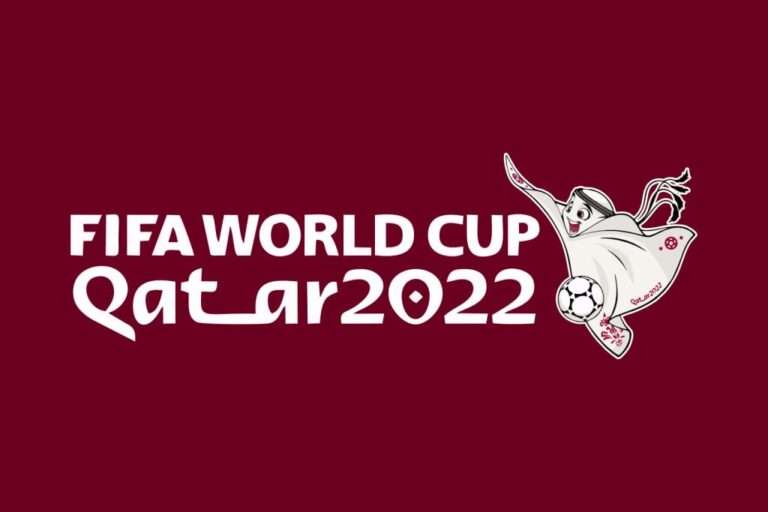
Qatar has also established itself as a global stage for major international events. The FIFA World Cup Qatar 2022 stands as a defining milestone, widely regarded as one of the most successfully organized tournaments in the competition’s history. The event highlighted Qatar’s capacity for world-class organization, advanced infrastructure, and the hospitality and openness of its people.
The tournament was led operationally by Nasser Al-Khater, Chief Executive Officer of the FIFA World Cup Qatar 2022, whose leadership played a key role in delivering an event that reshaped global perceptions of the region.
Katara Cultural Village is a purpose-built cultural complex on Doha’s eastern coast that blends traditional Qatari architectural elements with modern arts and cultural facilities. It features galleries, theatres, performance venues, mosques, outdoor art installations, cafés, and public spaces designed to facilitate cultural exchange and engagement.
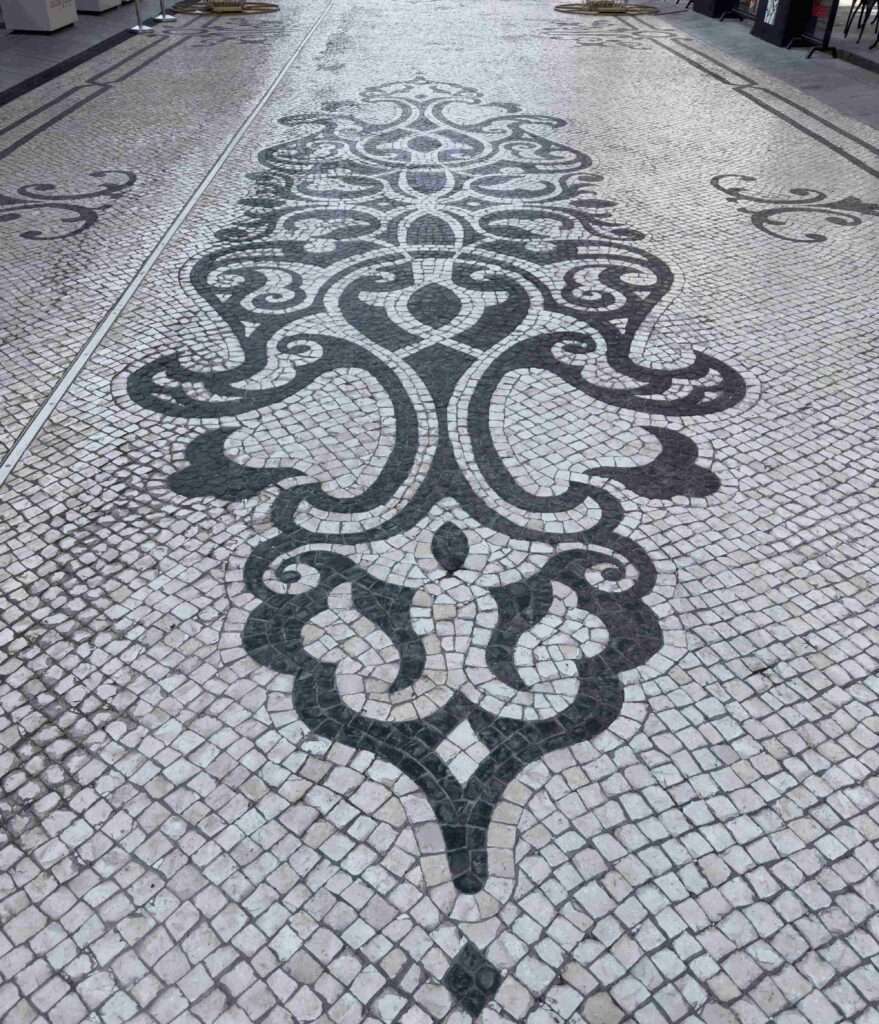
The presence of calçada portuguesa (Portuguese pavement) there — a distinctive mosaic-style stone pavement traditionally associated with Portuguese urban design — is a visually striking element that connects Portuguese heritage with the cultural landscape of Katara. Calçada portuguesa is a handcrafted pavement technique, characterized by small stones arranged into patterned mosaics, and widely recognized in Portugal and in former Portuguese cultural spheres.
"Calçada Portuguesa" at Katara Cultural Village in Doha
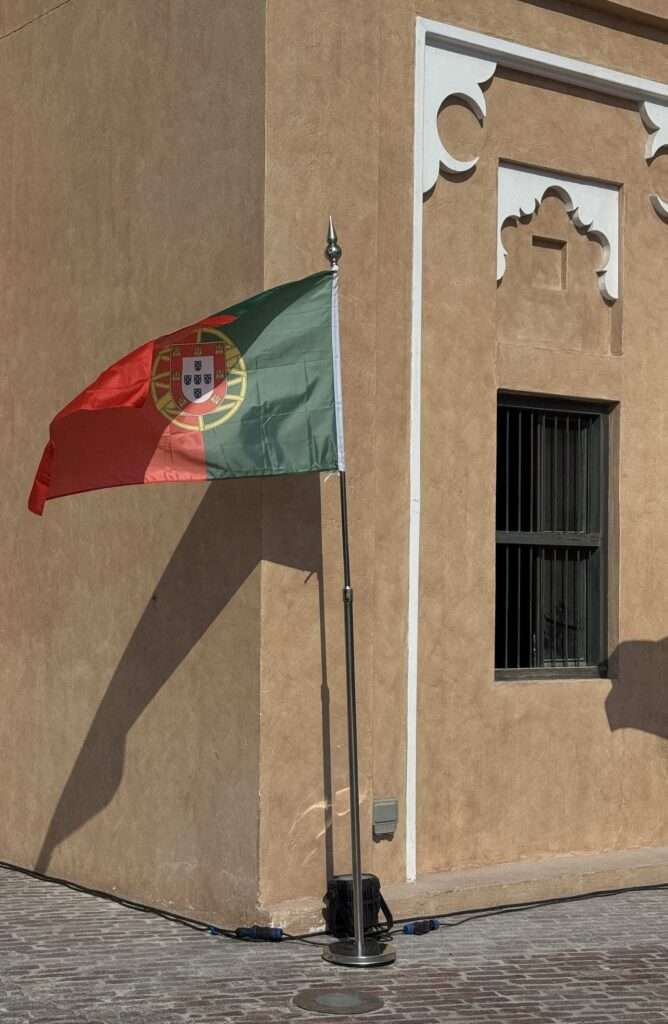
Portuguese Flag at Katara Cultural Village, Doha
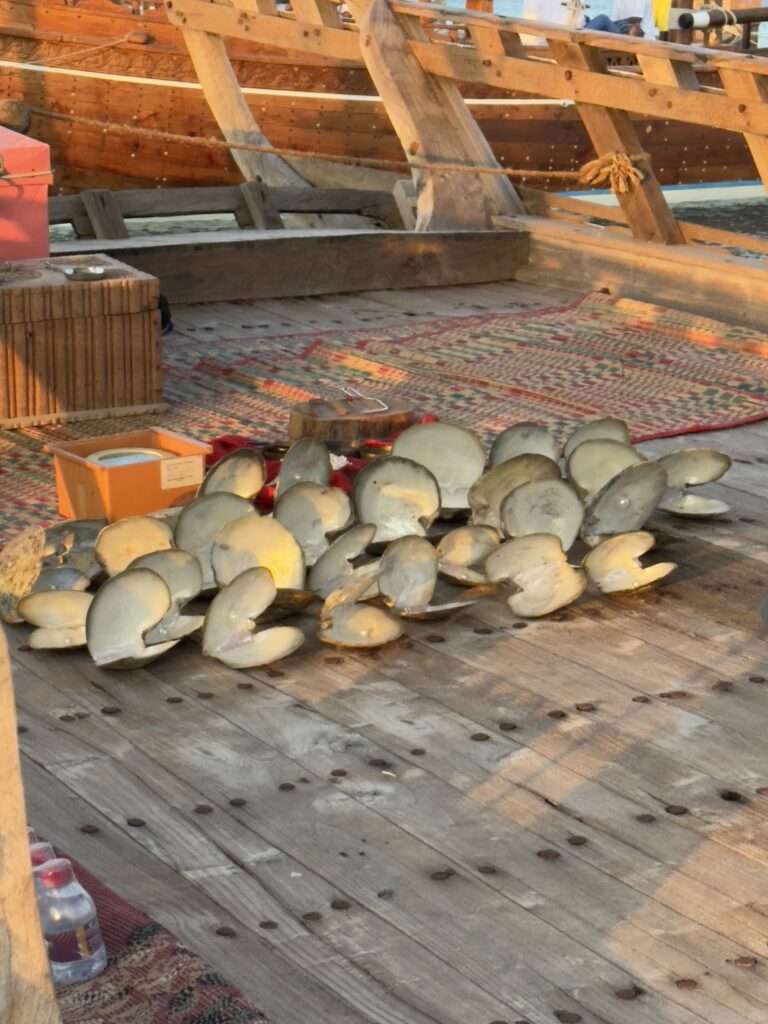
Pearls trade. Qatar keeps its traditions alive
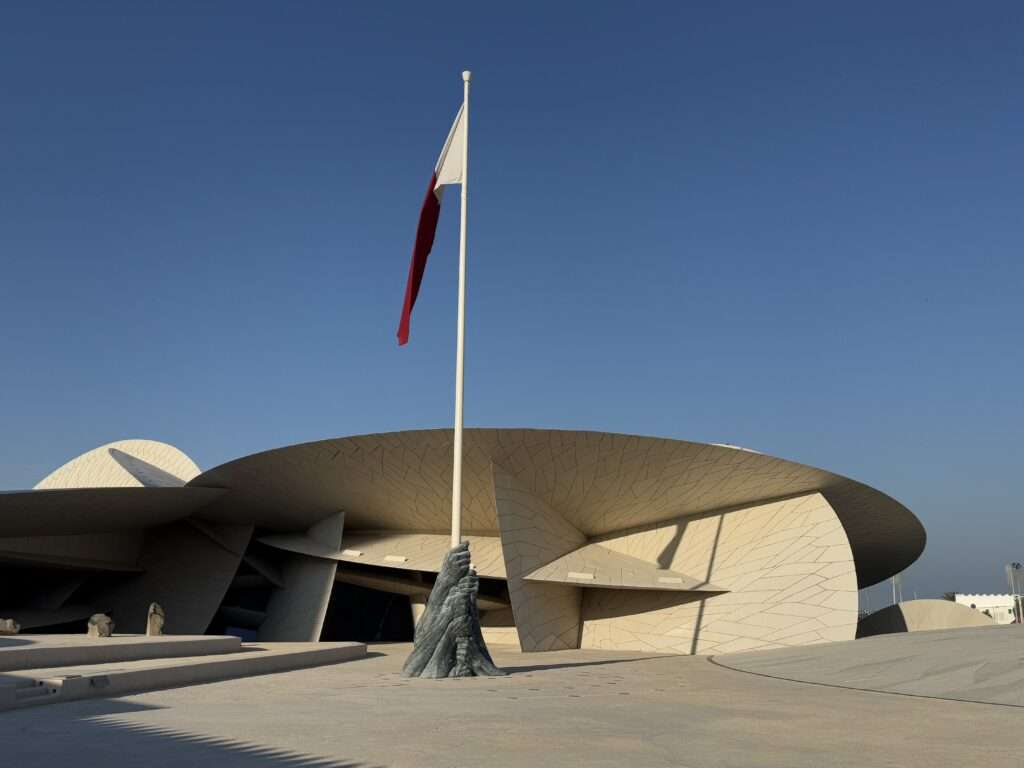
The National Museum of Qatar
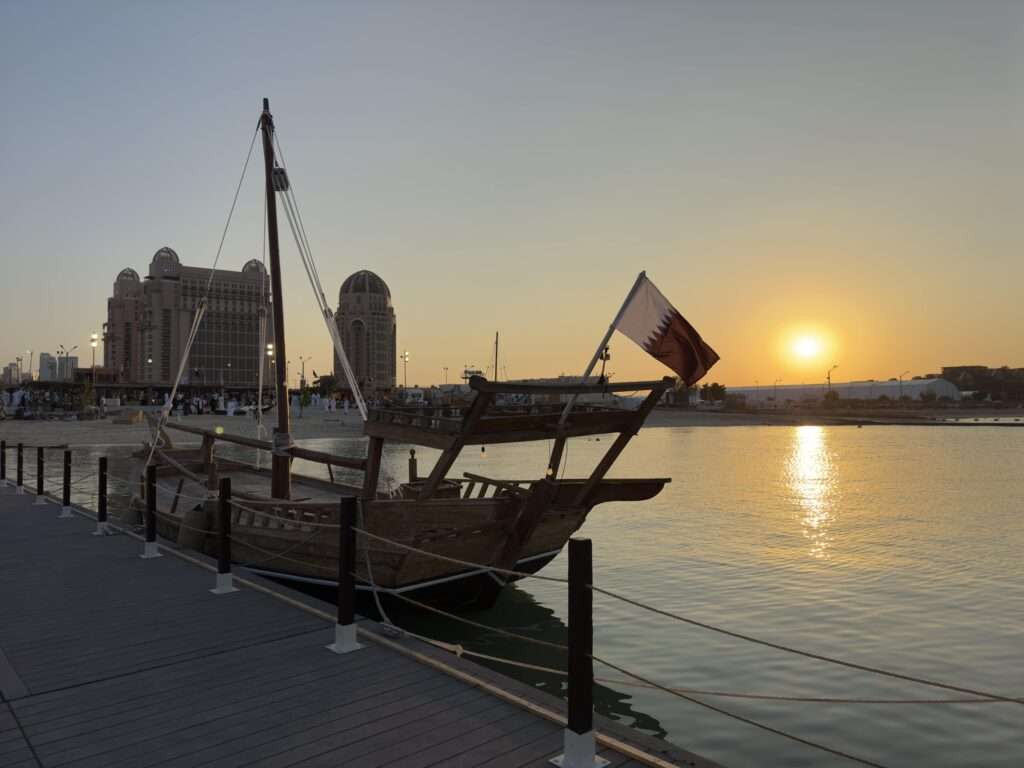
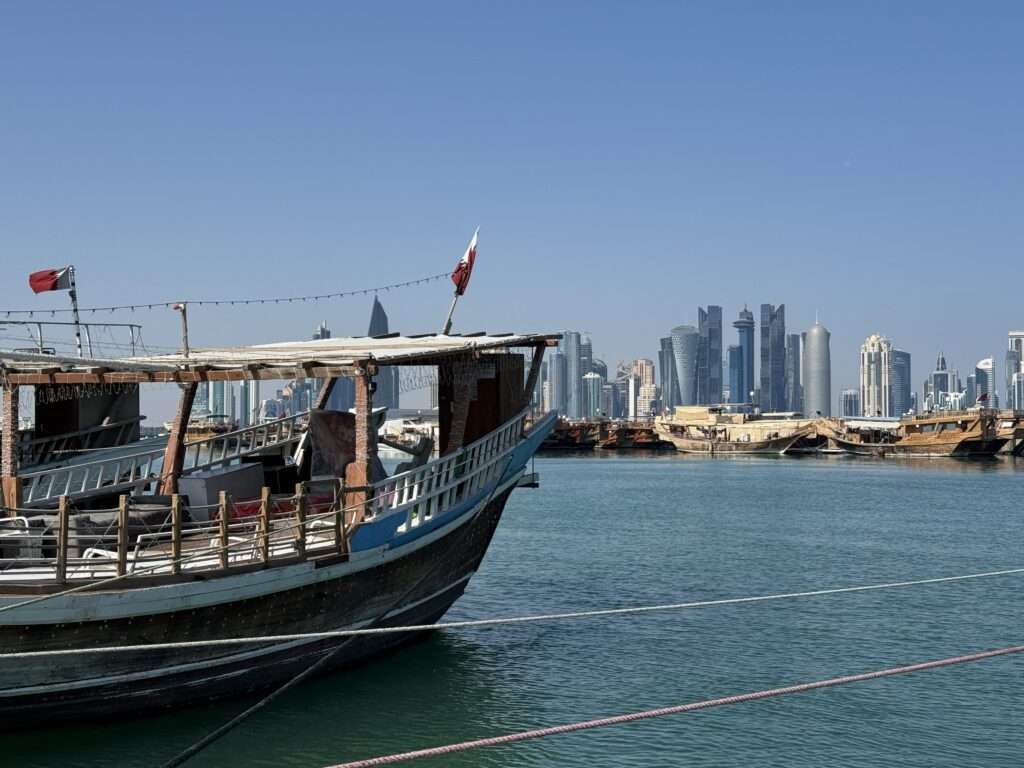
Today, dhows (داو) remain an important cultural symbol in Qatar and are frequently seen during national celebrations, heritage festivals, and along Doha’s Corniche, representing the country’s deep connection to the sea and its pre-oil history.
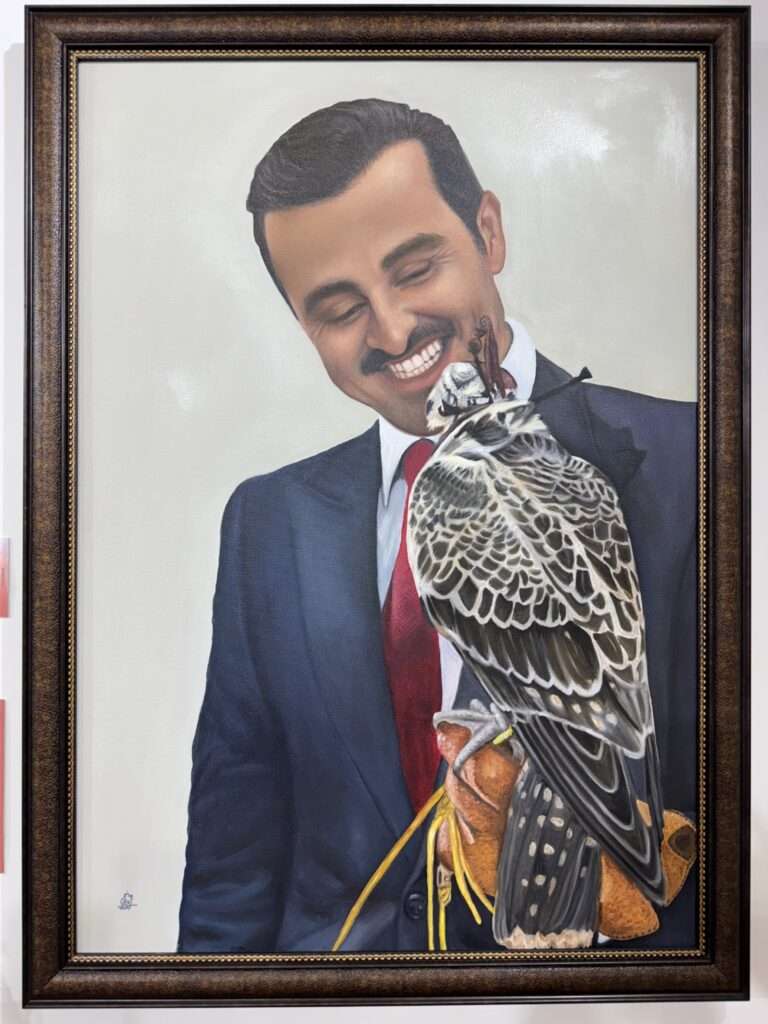
His Highness Sheikh Tamim bin Hamad Al Thani. Mona Yasien Abouzor, Palestine. "AL SHEIKH TAMIM". Oil Paiting. Doha, Qatar. Qatar International Art Festival 2024.
The State of Qatar is governed by the Al Thani family, whose leadership has shaped the country’s political, social, and economic development since the mid-19th century. The family’s rule was established under Sheikh Jassim bin Mohammed Al Thani, recognized as the founder of the modern Qatari state and a central figure in the country’s national identity.
Today, Qatar is led by His Highness Sheikh Tamim bin Hamad Al Thani, Amir of the State of Qatar, who assumed leadership in 2013. Under his guidance, Qatar has pursued a strategic vision focused on national cohesion, economic diversification, education, and international engagement, while preserving the country’s cultural and historical heritage.
The Amir’s leadership reflects a balance between continuity and modernization, emphasizing dialogue, diplomacy, and long-term development. This approach has reinforced Qatar’s role as an influential and respected actor on the regional and global stage.
The Al Thani family continues to play a central role in public life, contributing to governance, diplomacy, culture, and social development. Together, the ruling family and the Amir embody Qatar’s commitment to stability, progress, and an outward-looking vision grounded in tradition.
Portugal and Qatar enjoy active, friendly, and cooperative bilateral relations, with significant potential for deeper engagement in trade, investment, and innovation. Trade between the two countries has been growing, with total bilateral commerce reaching approximately QAR 441 million in 2024, reflecting expanding economic exchanges and mutual interest in strengthening ties.
On the trade front, Portugal exported an estimated US $39.25 million worth of goods to Qatar in 2024, including electrical and electronic equipment, vehicles, and furniture, while Qatar’s exports to Portugal amounted to about US $24.96 million, led by plastics and organic chemicals.
This foundation provides a platform for expanded cooperation. Portugal’s strategic geographic position on the Atlantic seaboard, its European Union membership, and its network of diplomatic and economic relations with Portuguese-speaking countries offer Qatar access to broader markets and a gateway into Europe. The Portuguese economy also benefits from an open trade environment, with exports and services representing a large share of
Qatar’s economy remains a compelling partner due to its dynamic and diversified growth. Backed by substantial energy resources, Qatar has one of the world’s strongest merchandise trade balances, with goods exports totalling tens of billions of dollars annually.

 (+351) 932 224 792
  info@luznurcapital.com